Falls Prevention & Balance Retraining
Evidence-based balance, gait, and reaction-time training to prevent trip and slip injuries
Comprehensive risk assessment and specialized balance physical therapy designed to eliminate environmental and physical fall risks.

What it is & how it works
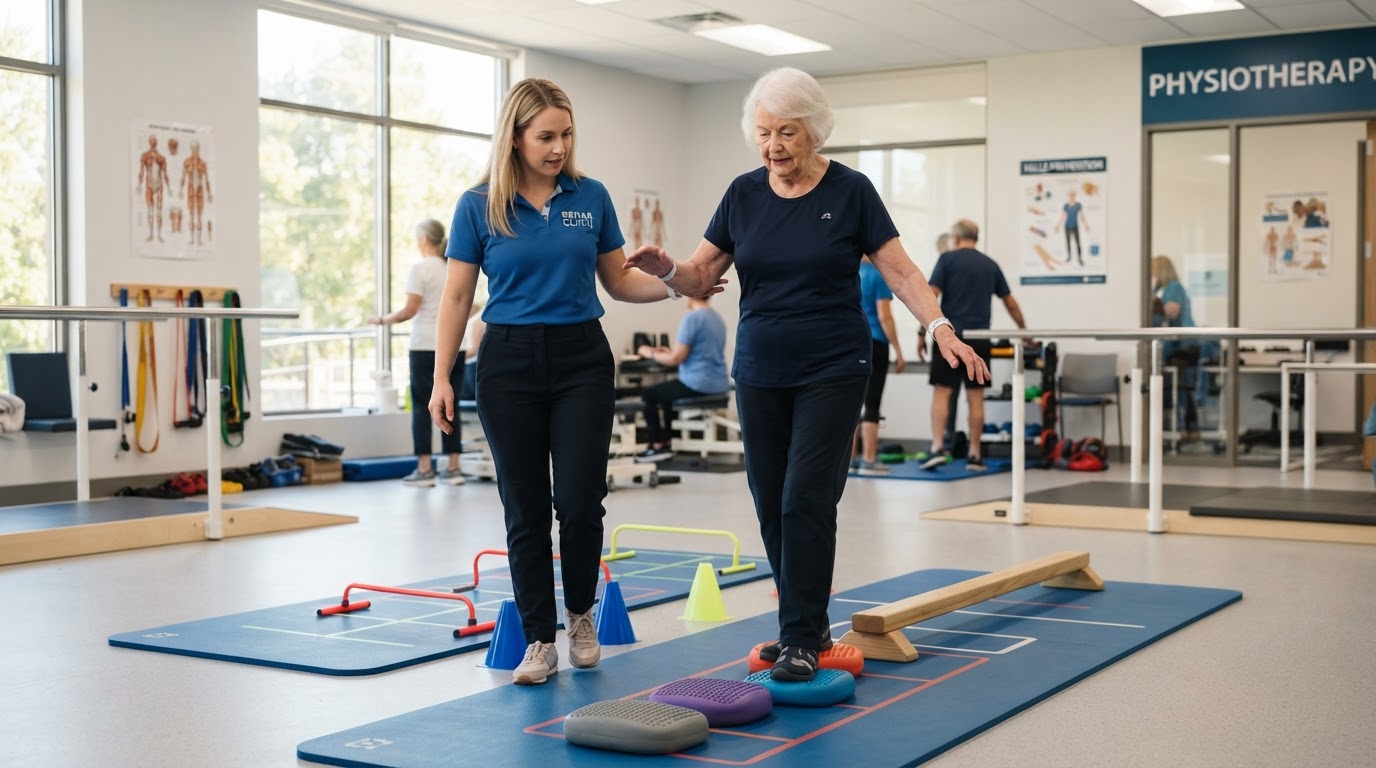
Falls are the leading cause of injury among older adults, and a fall — or even the fear of one — can trigger a downward spiral of reduced activity, muscle loss and further instability. Falls prevention physiotherapy is designed to break that cycle with evidence-based balance, gait and reaction-time training that targets the modifiable physical causes of falling before an injury occurs.
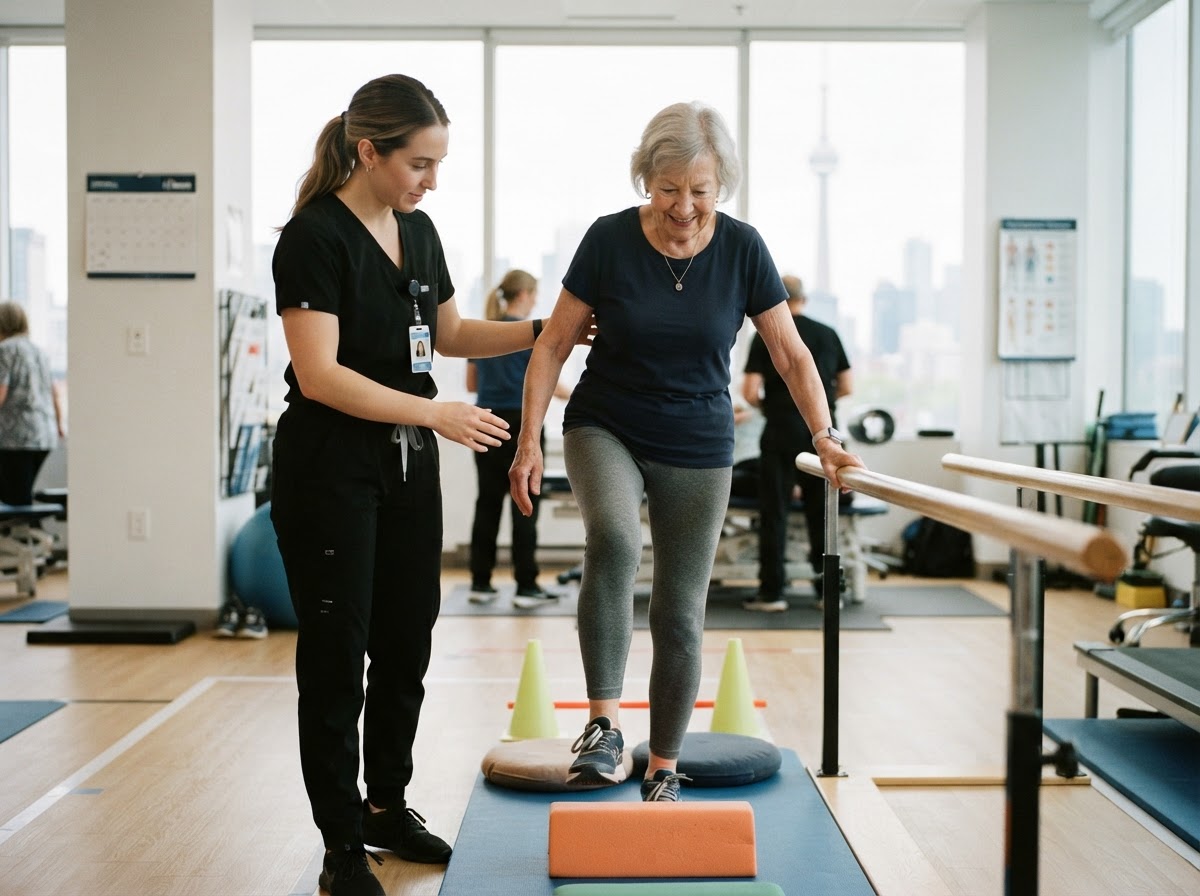
Our program begins with a comprehensive risk assessment using validated tools such as the Berg Balance Scale and Dynamic Gait Index, alongside a review of medications, vision, home hazards and footwear. We then build a layered plan: ankle and hip balance-strategy re-training, obstacle navigation, dual-task walking, and the fitting of assistive devices (canes, walkers) only when truly beneficial.
The goal is restored confidence and a measurably lower fracture and injury risk. By addressing the physical, environmental and behavioural contributors to falls together, most participants regain the assurance to walk in the community, travel and stay active — the opposite of the retreat that unaddressed fall risk usually produces.
What it may help with
Conditions We Treat
- History of falls or near-falls
- Persistent unsteadiness and balance loss
- Vestibular and age-related balance decline
- Fear of falling leading to activity reduction
- Gait slowing and shuffling
- Difficulty on stairs and uneven ground
Common Symptoms
- Unsteadiness on feet
- Frequent near-miss trips or slips
- Reliance on furniture for support
- Anxiety walking outdoors
Relevant areas addressed
Balance Strategy Muscles
Ankle and hip stabilizers retrained to power the automatic balance reactions that catch a stumble.
Core & Postural Control
Trunk muscles that maintain an upright centre of mass and reduce sway.
Gait & Stair Drivers
Hip, knee and ankle motors trained for a steadier, faster and more confident walking pattern.
Reaction & Dual-Task System
Cognitive-motor integration trained so balance holds even when attention is divided.
Main treatment methods offered
Berg & Dynamic Gait Index balance drills
A targeted, evidence-based technique tailored to your assessment and progressed as your tolerance improves.
Ankle & hip strategy re-training
Delivered by a registered therapist and integrated with your broader rehabilitation plan.
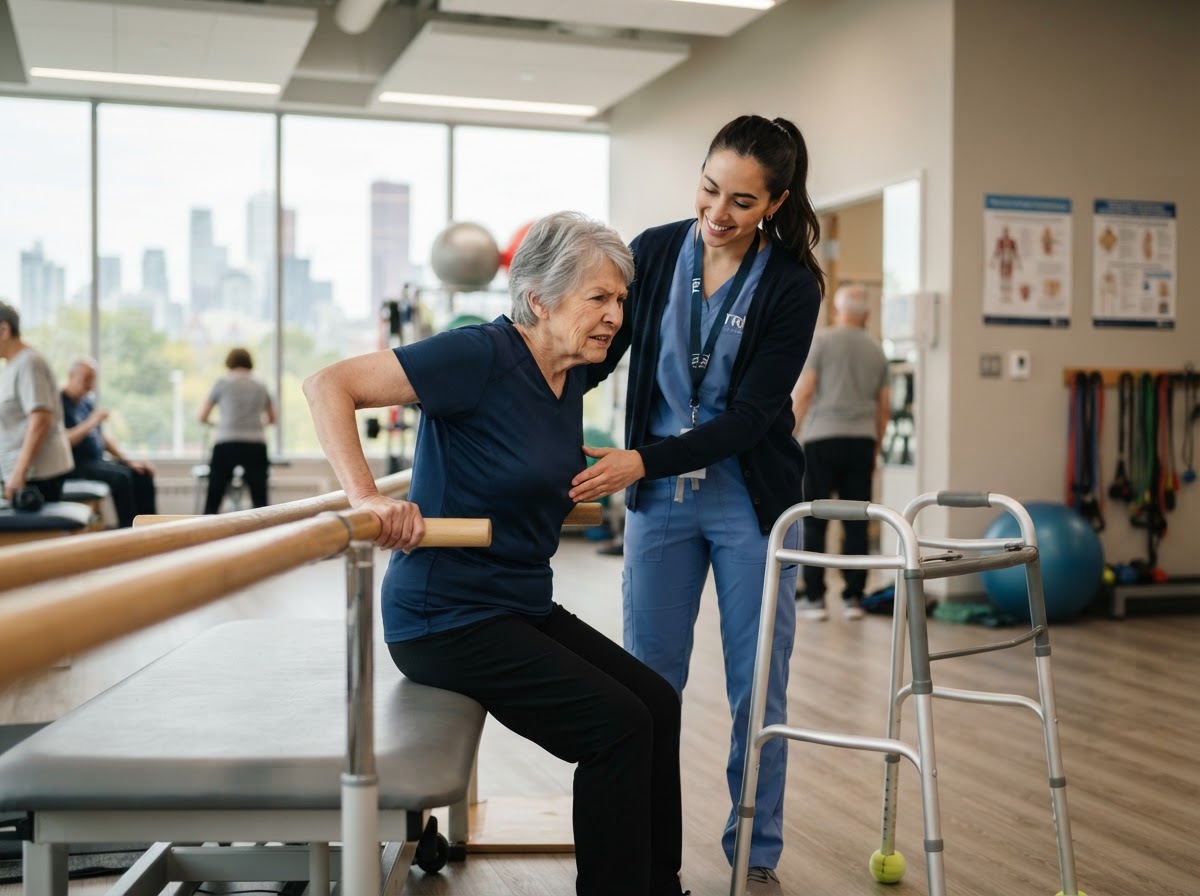
Assistive device fitting (walkers/canes)
Combined with hands-on care and a structured home routine for lasting, functional results.
Obstacle course navigation
Adjusted each session to your response so treatment stays effective and comfortable.
Realistic outcomes & limitations
What You Can Expect
Restored confidence walking anywhere
A realistic, evidence-supported outcome you can expect from consistent treatment and home adherence.
Measurably reduced risk of fractures
Most patients notice meaningful change within the first several sessions.
Safer home and community mobility
Sustained by the home program and periodic maintenance once the initial goals are met.
Honest Limitations
- Results depend on consistent home exercise and adherence to the prescribed program.
- Acute inflammation, recent surgery or new symptoms may require modification or medical co-management.
- Outcomes vary by individual; we set realistic milestones after your initial assessment.
Assessment, duration & treatment process
Risk Assessment (45–60 minutes)
Validated balance and gait testing, a home-hazard and medication review, and a clear, individualized risk-reduction plan.
Balance Training (30–60 minutes)
Targeted balance, gait, obstacle and dual-task drills with assistive-device fitting as needed, plus a daily home routine.
Progression & Confidence
We re-measure balance periodically and progress the program to rebuild community walking confidence and independence.
Precautions & possible side effects
Suitable For
- Seniors who have fallen or feel unsteady.
- People with age-related balance or gait decline.
- Those avoiding activity because of fall fear.
- Families wanting proactive injury prevention.
Precautions
- Balance drills are closely spotted and equipment-assisted as needed.
- Medications that affect balance are reviewed with your physician.
- Vision and footwear are addressed as part of the plan.
- Home hazards are identified so the environment matches the gains.
Common questions & booking
Ready to take your first step?
Book your initial consultation at One Step Ahead Mobility in Toronto. No referral required.
Take Your First Step Toward Lasting Relief
Every treatment at One Step Ahead Mobility begins with a thorough assessment and a clear, personalized plan. No referral required — direct billing available.