Constraint-Induced Movement Therapy (CIMT)
Intensive use of the affected limb to rewire brain motor maps after stroke or brain injury
Evidence-based neuro-rehabilitation protocol that restrains the unaffected limb and forces intensive, repetitive use of the impaired arm or leg to drive cortical reorganization.

What it is & how it works
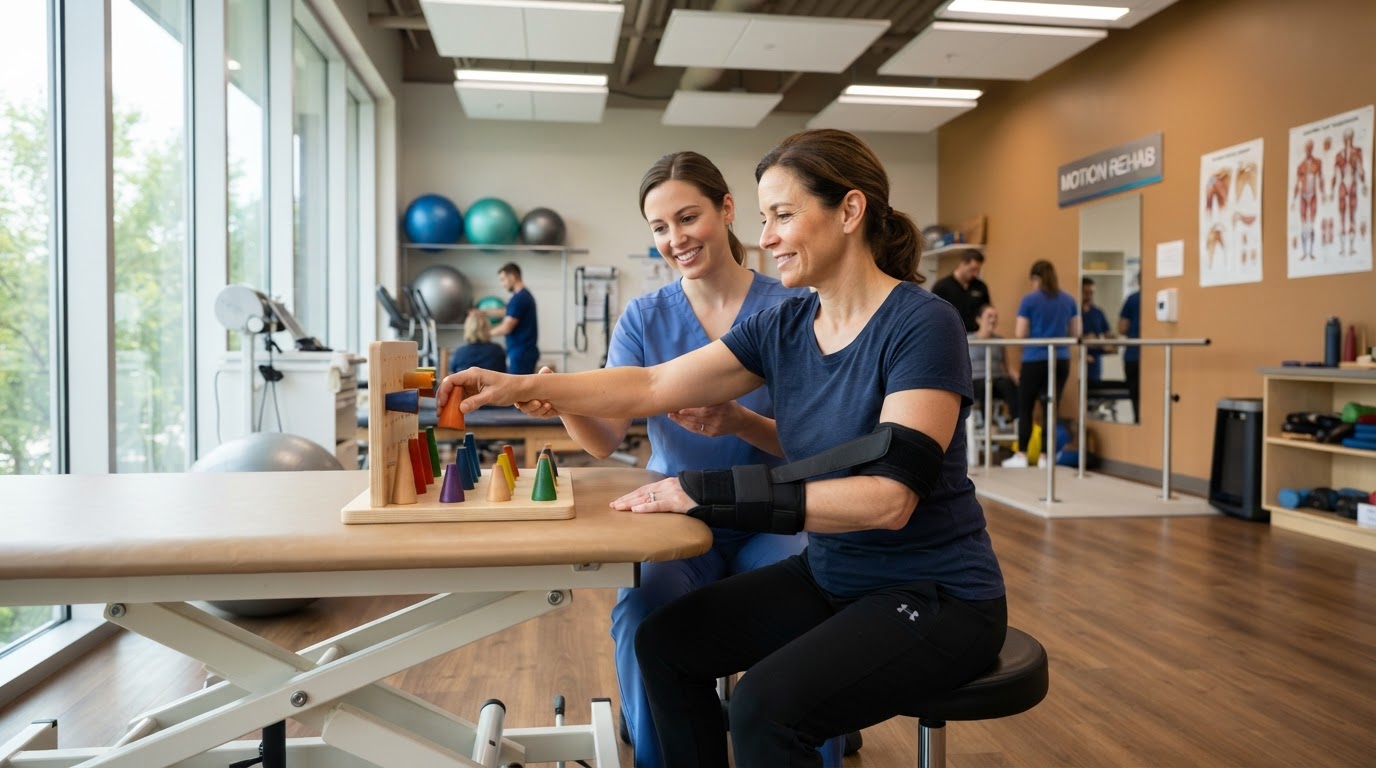
Constraint-Induced Movement Therapy (CIMT) is one of the most rigorously studied and effective rehabilitation techniques for upper-limb recovery after stroke and traumatic brain injury. Its principle directly counters a phenomenon called 'learned non-use': because the affected arm is slow and clumsy, patients naturally rely on the unaffected arm for daily tasks, which further weakens and suppresses the impaired limb. CIMT reverses this by restraining the good limb and forcing intensive use of the affected one.
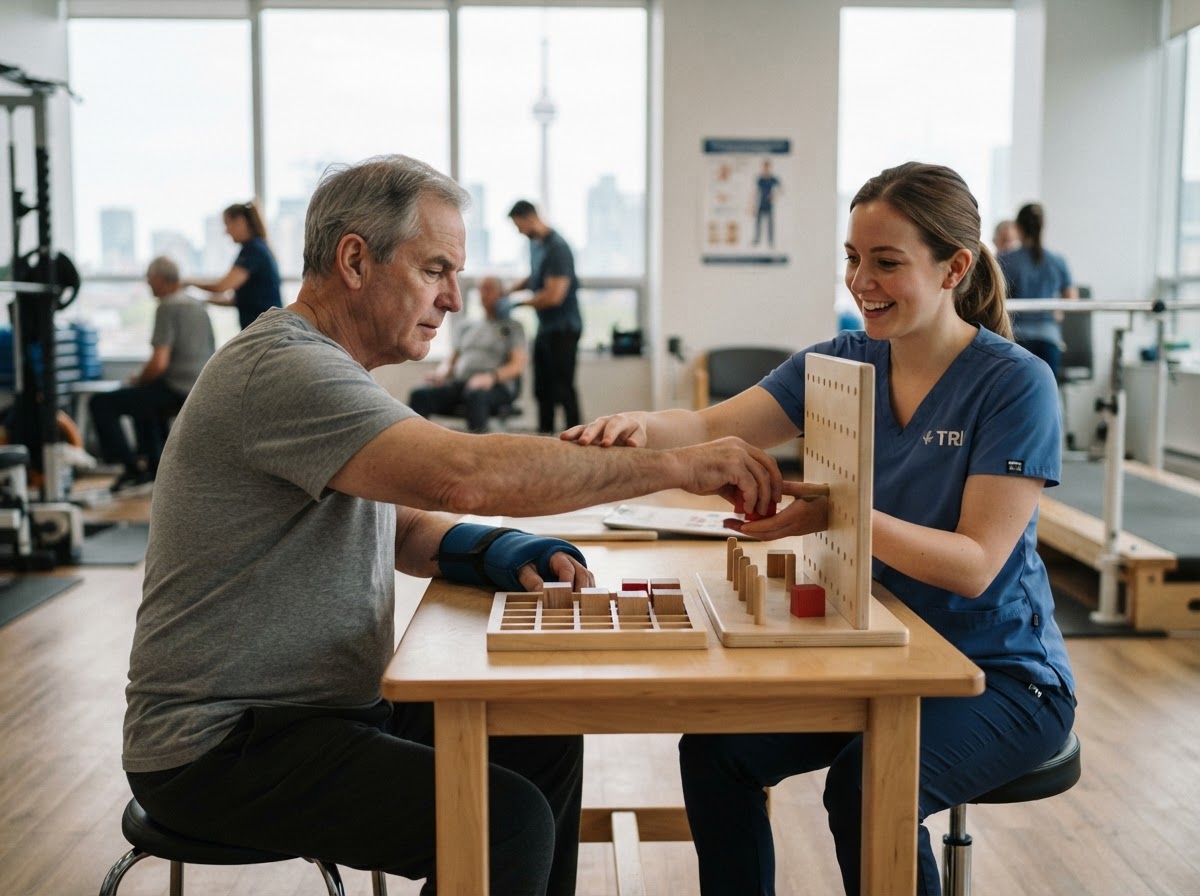
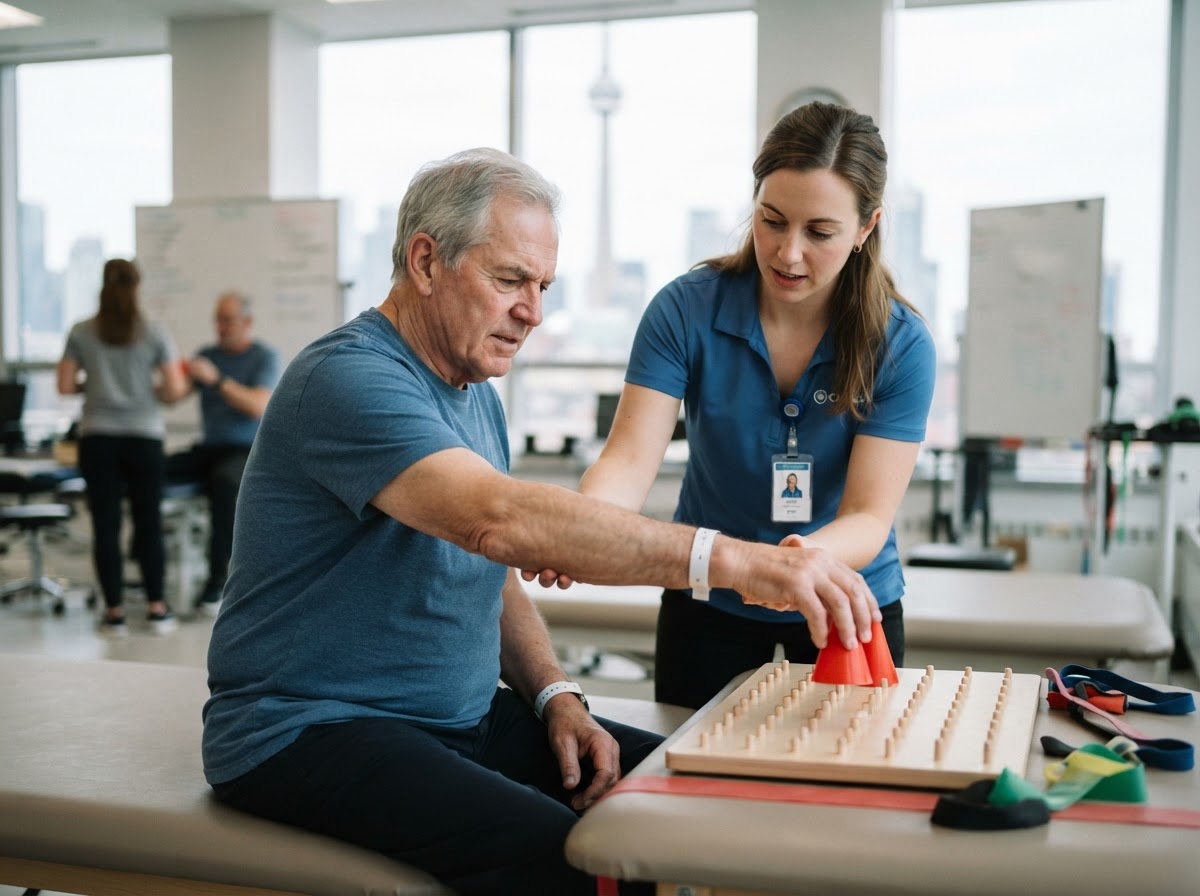
A classic CIMT program restrains the unaffected arm with a mitt for 6 hours a day over two weeks of intensive, shaping-based practice. Repetitive, task-oriented movements — reach, grasp, manipulation — drive cortical reorganization, measurable on brain imaging as an expansion of the motor map representing the affected limb. Modified, lower-dose versions adapt the protocol for patients who cannot tolerate the full schedule.
The 'transfer package' is what makes CIMT distinct from generic exercise: structured carryover tasks translate intensive practice into real-world arm use. We track motor function with standardized tests (the Wolf Motor Function Test and Motor Activity Log) and the gains typically endure well beyond the treatment period, supporting greater independence in dressing, eating and household tasks.
What it may help with
Conditions We Treat
- Chronic stroke with residual arm or hand weakness
- Traumatic brain injury recovery
- Learned non-use of the affected upper limb
- Reduced active reach, grasp and hand dexterity
- Compensatory one-handed movement patterns
Common Symptoms
- Learned non-use of a weakened arm or leg
- Reduced grip or reach after neurological injury
- Compensatory one-handed movement patterns
- Slow motor planning and execution
Relevant areas addressed
Affected Upper Extremity
Shoulder, elbow, wrist and hand on the impaired side, retrained through intensive, repetitive, shaping-based task practice.
Glenohumeral & Scapular Motors
Shoulder reach and stability retrained to restore overhead and forward functional arm use.
Hand & Fine Motor Group
Grasp, pinch and manipulation trained for the dexterity needed in self-care and household tasks.
Cortical Motor Map
The brain's representation of the affected limb, reorganized through high-repetition, high-effort practice.
Main treatment methods offered
Mitt restraint of unaffected limb
A targeted, evidence-based technique tailored to your assessment and progressed as your tolerance improves.
Shaping & repetitive task practice
Delivered by a registered therapist and integrated with your broader rehabilitation plan.
Transfer package for real-world use
Combined with hands-on care and a structured home routine for lasting, functional results.
Motor mapping & neuro-plasticity drills
Adjusted each session to your response so treatment stays effective and comfortable.
Realistic outcomes & limitations
What You Can Expect
Restored spontaneous use of the affected limb
A realistic, evidence-supported outcome you can expect from consistent treatment and home adherence.
Measurable cortical reorganization
Most patients notice meaningful change within the first several sessions.
Greater independence in daily self-care
Sustained by the home program and periodic maintenance once the initial goals are met.
Lasting gains beyond the clinic
Confirmed by objective re-measurement throughout your program.
Honest Limitations
- Results depend on consistent home exercise and adherence to the prescribed program.
- Acute inflammation, recent surgery or new symptoms may require modification or medical co-management.
- Outcomes vary by individual; we set realistic milestones after your initial assessment.
Assessment, duration & treatment process
Initial Assessment (60 minutes)
Baseline measurement with the Wolf Motor Function Test and Motor Activity Log to confirm suitability and quantify starting function.
Intensive Protocol (2 weeks)
Classic CIMT: 3–6 hours daily over two weeks with the unaffected arm restrained, plus a transfer package of real-world tasks. Modified lower-dose options are available.
Continuation & Re-measurement
Post-protocol re-testing confirms gains, and we prescribe a maintenance home routine to lock in cortical reorganization.
Precautions & possible side effects
Suitable For
- Stroke or brain-injury survivors with residual arm movement.
- Patients who can extend the wrist and fingers at least partially.
- Motivated individuals able to commit to an intensive schedule.
- Those wanting to overcome compensatory one-handed dependence.
Precautions
- Requires minimum active movement in the affected limb to qualify.
- Intensive sessions demand stamina; we screen for fatigue tolerance.
- Shoulder pain is managed to prevent aggravation during reaching.
- The restraint is removed for safety-critical tasks and at home as guided.
Common questions & booking
Ready to take your first step?
Book your initial consultation at One Step Ahead Mobility in Toronto. No referral required.
Take Your First Step Toward Lasting Relief
Every treatment at One Step Ahead Mobility begins with a thorough assessment and a clear, personalized plan. No referral required — direct billing available.