Osteoporosis & Bone Health Physiotherapy
Bone-safe exercise, spine preservation, and posture correction for low bone density
Medically safe resistance and weight-bearing exercise programs strictly avoiding spinal flexion and twisting movements that strain vulnerable vertebrae.

What it is & how it works
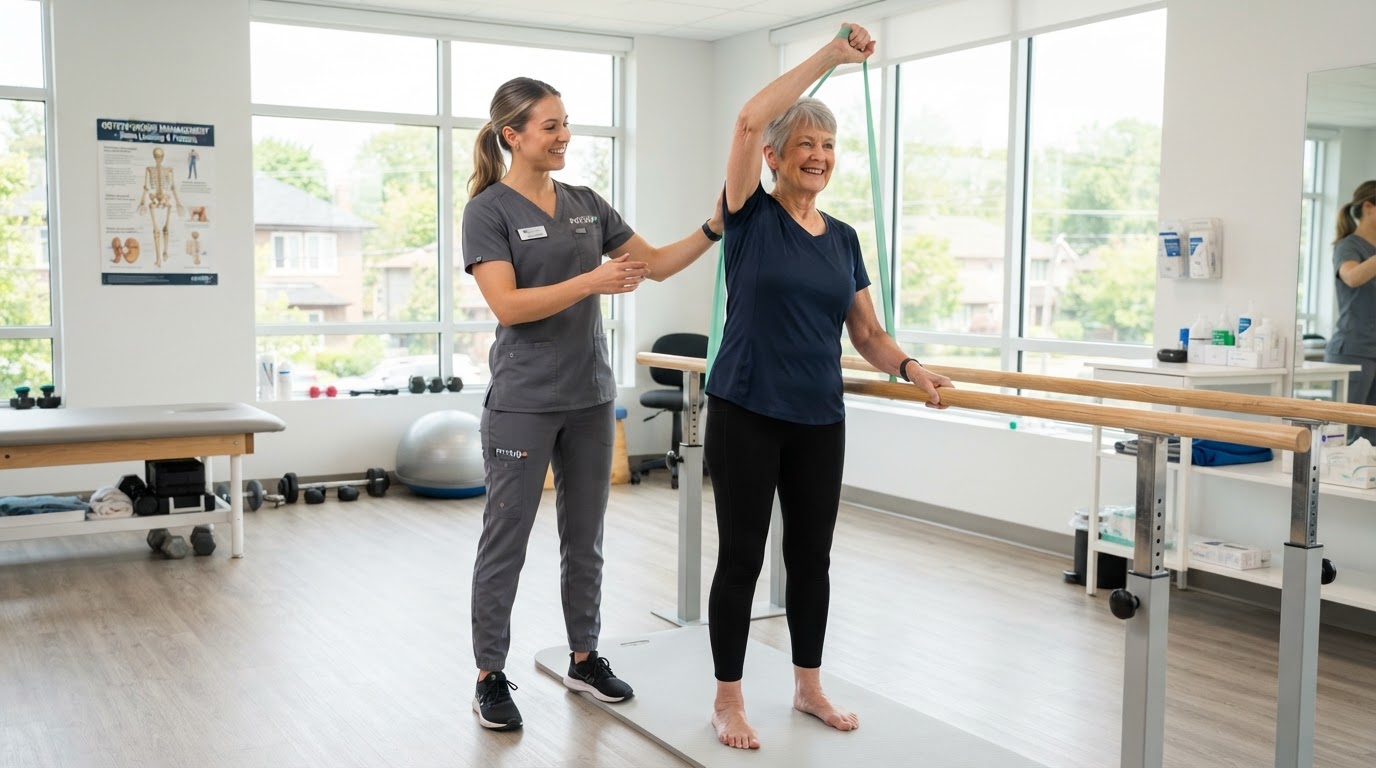
Osteoporosis is a skeletal disease in which bone density and quality decline, leaving bones — especially the vertebrae, hips and wrists — fragile and vulnerable to fracture. It is often silent until a minor fall or even a sneeze causes a compression fracture of the spine. Physiotherapy is a central pillar of osteoporosis management: the right exercise can preserve and even build bone density, while the wrong exercise can fracture vulnerable vertebrae.
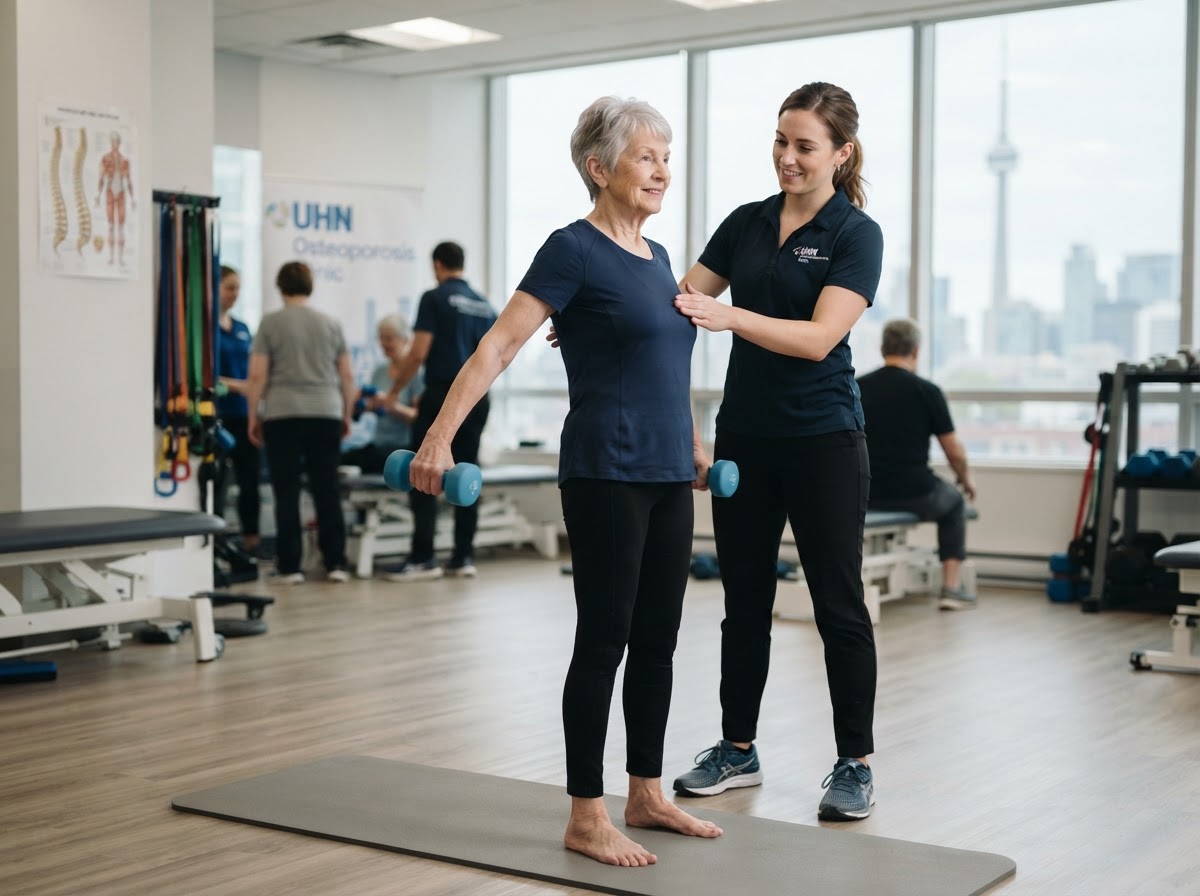
Our bone-health program is built on two pillars: site-specific bone-loading resistance training that stimulates osteogenesis (bone formation), and posture-focused extension strengthening that counter the forward rounding (kyphosis) which both signals and worsens spinal fragility. We strictly avoid loaded spinal flexion and twisting — the movements most likely to fracture fragile vertebrae — and teach safe lifting biomechanics for everyday life.
Education is woven throughout. Patients learn which movements to embrace and which to avoid, how to lift and reach safely, and how to build a sustainable home routine that protects the spine and hips over the long term. The aim is upright, confident posture and a measurably lower fracture risk.
What it may help with
Conditions We Treat
- Osteopenia and osteoporosis (low bone density)
- Vertebral compression fracture prevention
- Kyphosis and forward postural rounding
- Post-fracture rehabilitation
- Age-related height loss and mid-back ache
- Hip-fracture prevention
Common Symptoms
- Low DEXA bone density score
- Loss of height or forward rounding (kyphosis)
- Fear of bone fracture
- Mid-back ache
Relevant areas addressed
Spinal Extensor Muscles
Back muscles strengthened in extension to hold the spine upright and counter the rounding that fractures fragile vertebrae.
Hip & Proximal Femur
Gluteal and thigh muscles loaded to build bone density at the hip, the site of highest fracture risk.
Wrist & Forearm
Loaded to build bone at another common fracture site and support safe falls.
Core & Postural System
Trained in extension-safe patterns to protect the spine during lifting and daily activity.
Main treatment methods offered
Bone-loading resistance training
A targeted, evidence-based technique tailored to your assessment and progressed as your tolerance improves.
Postural extension strengthening
Delivered by a registered therapist and integrated with your broader rehabilitation plan.
Safe lifting biomechanics
Combined with hands-on care and a structured home routine for lasting, functional results.
Hip-strengthening protocols
Adjusted each session to your response so treatment stays effective and comfortable.
Realistic outcomes & limitations
What You Can Expect
Stimulated bone density preservation
A realistic, evidence-supported outcome you can expect from consistent treatment and home adherence.
Prevention of spinal compression fractures
Most patients notice meaningful change within the first several sessions.
Upright confident posture
Sustained by the home program and periodic maintenance once the initial goals are met.
Honest Limitations
- Results depend on consistent home exercise and adherence to the prescribed program.
- Acute inflammation, recent surgery or new symptoms may require modification or medical co-management.
- Outcomes vary by individual; we set realistic milestones after your initial assessment.
Assessment, duration & treatment process
Initial Assessment (45–60 minutes)
A review of DEXA scores, fracture history and posture, with an assessment of safe movement patterns and a bone-safe exercise plan.
Treatment Sessions (30–60 minutes)
Progressive bone-loading resistance and extension-posture training, with strict avoidance of loaded flexion and twisting, plus a home routine.
Long-Term Bone Maintenance
Bone-building is a lifelong process; we provide a sustainable home program and re-assess posture and strength over time.
Precautions & possible side effects
Suitable For
- Individuals diagnosed with osteopenia or osteoporosis.
- Those wanting to prevent spinal and hip fractures.
- People with kyphosis or age-related height loss.
- Post-fracture patients cleared for rehab.
Precautions
- Loaded spinal flexion and twisting are strictly avoided.
- Recent fractures are managed with physician guidance before loading.
- Resistance is progressed gently to protect fragile bone.
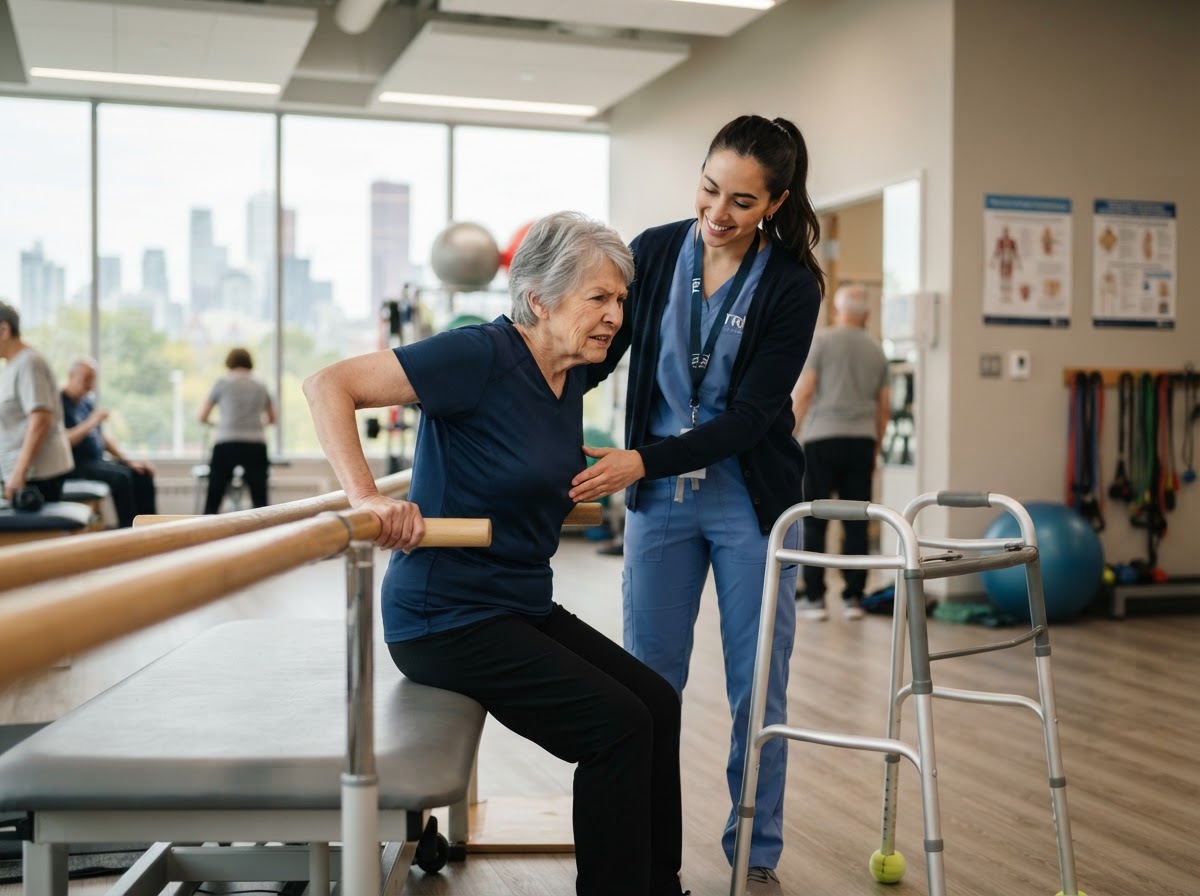
- Balance work is included to prevent the falls that cause fractures.
Common questions & booking
Ready to take your first step?
Book your initial consultation at One Step Ahead Mobility in Toronto. No referral required.
Take Your First Step Toward Lasting Relief
Every treatment at One Step Ahead Mobility begins with a thorough assessment and a clear, personalized plan. No referral required — direct billing available.