Lower Back Pain & Sciatica Rehabilitation
Eliminating acute low back spasms, disc herniation, sciatica nerve pain, and lumbar instability
McKenzie method spinal extension, spinal decompression techniques, core stabilization, and nerve flossing to resolve lower back suffering.

What it is & how it works
Lower back pain is the leading cause of disability worldwide, ranging from a sudden, sharp spasm to a chronic, dull ache that limits sitting, bending and lifting. Common drivers include disc herniation, sciatica (nerve root irritation), lumbar instability, facet joint irritation and muscle strain. The good news: the vast majority of back pain resolves with targeted, active conservative care.
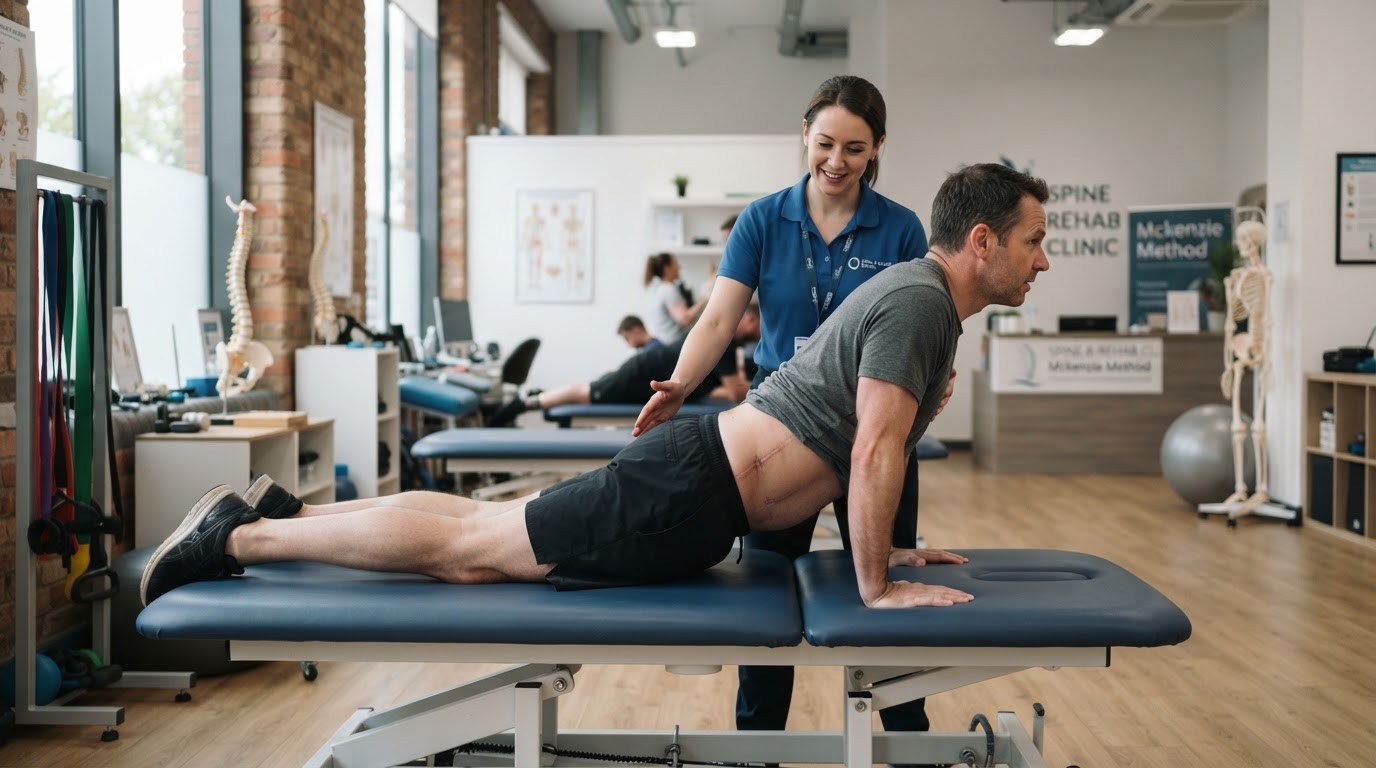
Our program uses the McKenzie Method (Mechanical Diagnosis and Therapy) to identify the specific directional preference that centralizes and relieves your pain — often spinal extension for disc-related symptoms. We layer in sciatic nerve glides to free an irritated nerve, deep core and glute activation to stabilize the lumbar spine, and lumbar mobilization to restore segmental range. Each technique is matched to the individual's presentation rather than applied generically.
The goal is not just pain relief but a strong, resilient back. We build progressive core and hip strength, teach safe lifting biomechanics, and equip you with a self-management routine so that the episodes become less frequent, less severe, and shorter — the opposite of the chronic-recurrence pattern that unmanaged back pain usually follows.
What it may help with
Conditions We Treat
- Acute and chronic lower back pain
- Lumbar disc herniation
- Sciatica and nerve-root irritation
- Lumbar instability and recurrent strains
- Facet joint irritation
- Morning back stiffness and pain with sitting
Common Symptoms
- Sharp or dull low back ache
- Sciatica pain shooting down leg
- Pain with sitting, bending, or lifting
- Morning back stiffness
Relevant areas addressed
Lumbar Spine Segments
L1–L5 joints mobilized and loaded through directional-preference exercises to centralize and relieve pain.
Deep Core & Multifidus
The stabilizing core muscles retrained to brace and protect the spine under load.
Gluteal & Hip Group
Glute and hip power built to offload the lumbar spine during lifting and walking.
Sciatic Nerve Pathway
The nerve mobilized with gliding techniques to relieve radiating leg pain.
Main treatment methods offered
McKenzie mechanical diagnosis & therapy
A targeted, evidence-based technique tailored to your assessment and progressed as your tolerance improves.
Sciatic nerve glides
Delivered by a registered therapist and integrated with your broader rehabilitation plan.
Deep core & glute activation
Combined with hands-on care and a structured home routine for lasting, functional results.
Lumbar spine mobilization
Adjusted each session to your response so treatment stays effective and comfortable.
Realistic outcomes & limitations
What You Can Expect
Centralization and relief of leg pain
A realistic, evidence-supported outcome you can expect from consistent treatment and home adherence.
Strong resilient lumbar spine
Most patients notice meaningful change within the first several sessions.
Ability to lift, bend, and sit comfortably
Sustained by the home program and periodic maintenance once the initial goals are met.
Honest Limitations
- Results depend on consistent home exercise and adherence to the prescribed program.
- Acute inflammation, recent surgery or new symptoms may require modification or medical co-management.
- Outcomes vary by individual; we set realistic milestones after your initial assessment.
Assessment, duration & treatment process
Initial Assessment (45–60 minutes)
A McKenzie-based mechanical assessment to find your directional preference and classify the back-pain syndrome.
Treatment Sessions (30–60 minutes)
Directional exercise, nerve glides, core and glute strengthening, and lumbar mobilization, with a daily home routine.
Resilience & Self-Management
We build progressive strength and lifting mechanics so episodes become shorter and less frequent.
Precautions & possible side effects
Suitable For
- Anyone with acute or chronic lower back pain.
- Patients with disc herniation or sciatica.
- Those with recurrent back episodes.
- People wanting to avoid reliance on passive treatment alone.
Precautions
- Red flags (saddle numbness, bladder changes) prompt urgent medical referral.
- Severe radiating weakness is imaged before aggressive loading.
- Acute spasms are settled before progressing to strengthening.
- Lifting mechanics are coached to prevent recurrence.
Common questions & booking
Ready to take your first step?
Book your initial consultation at One Step Ahead Mobility in Toronto. No referral required.
Take Your First Step Toward Lasting Relief
Every treatment at One Step Ahead Mobility begins with a thorough assessment and a clear, personalized plan. No referral required — direct billing available.