Parkinson's LSVT BIG & PWR! Physical Therapy
Certified LSVT BIG & PWR! Moves to re-calibrate amplitude, stride length, and posture
Specialized neurological therapy designed specifically for Parkinson's disease, helping patients override bradykinesia (slowness) and rigidity through high-amplitude movement retraining.
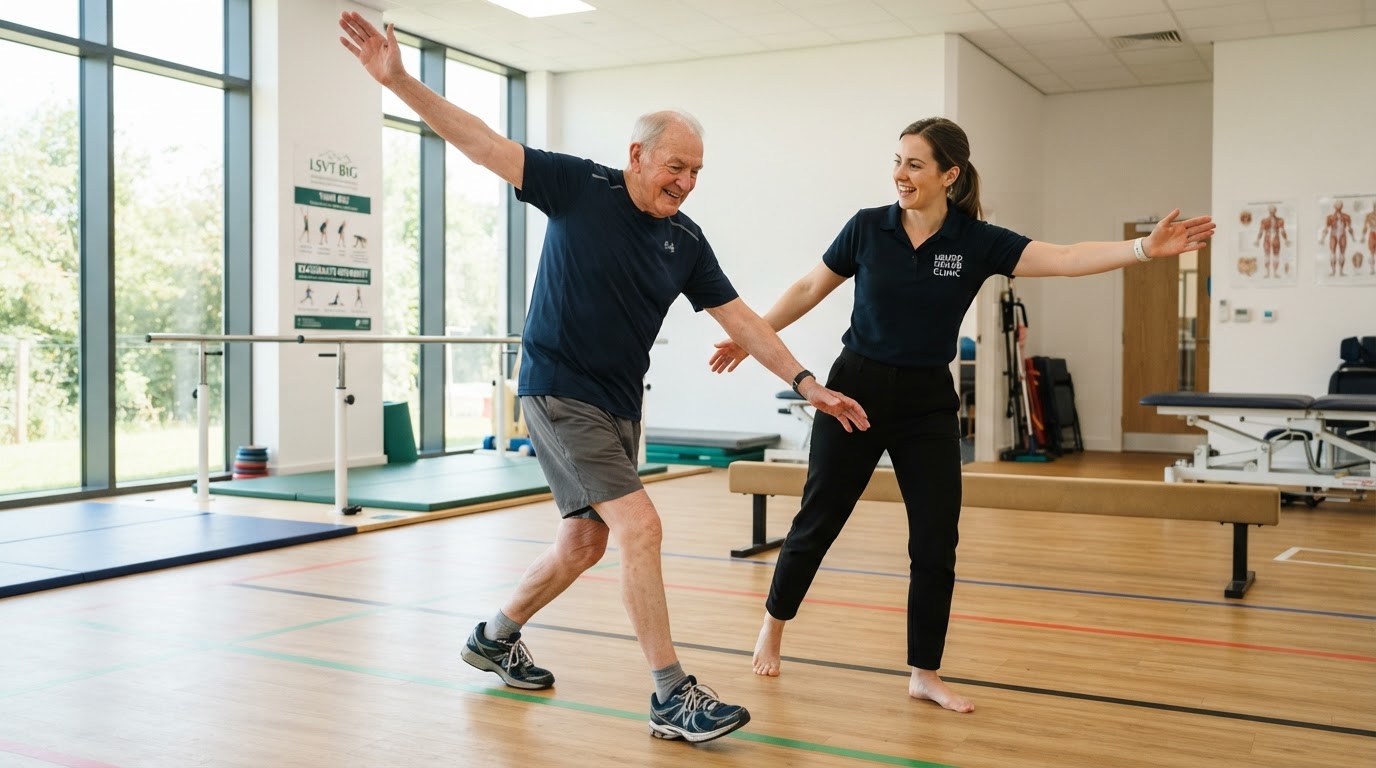

What it is & how it works
Parkinson's disease is a progressive neurodegenerative condition caused by the loss of dopamine-producing neurons in the substantia nigra. Its cardinal motor features — bradykinesia (slowness), rigidity, resting tremor and postural instability — steadily erode the scale, speed and automaticity of movement. While medication replaces dopamine, it does not fully normalize motor learning, which is why structured, high-amplitude exercise is now considered essential disease-modifying therapy.
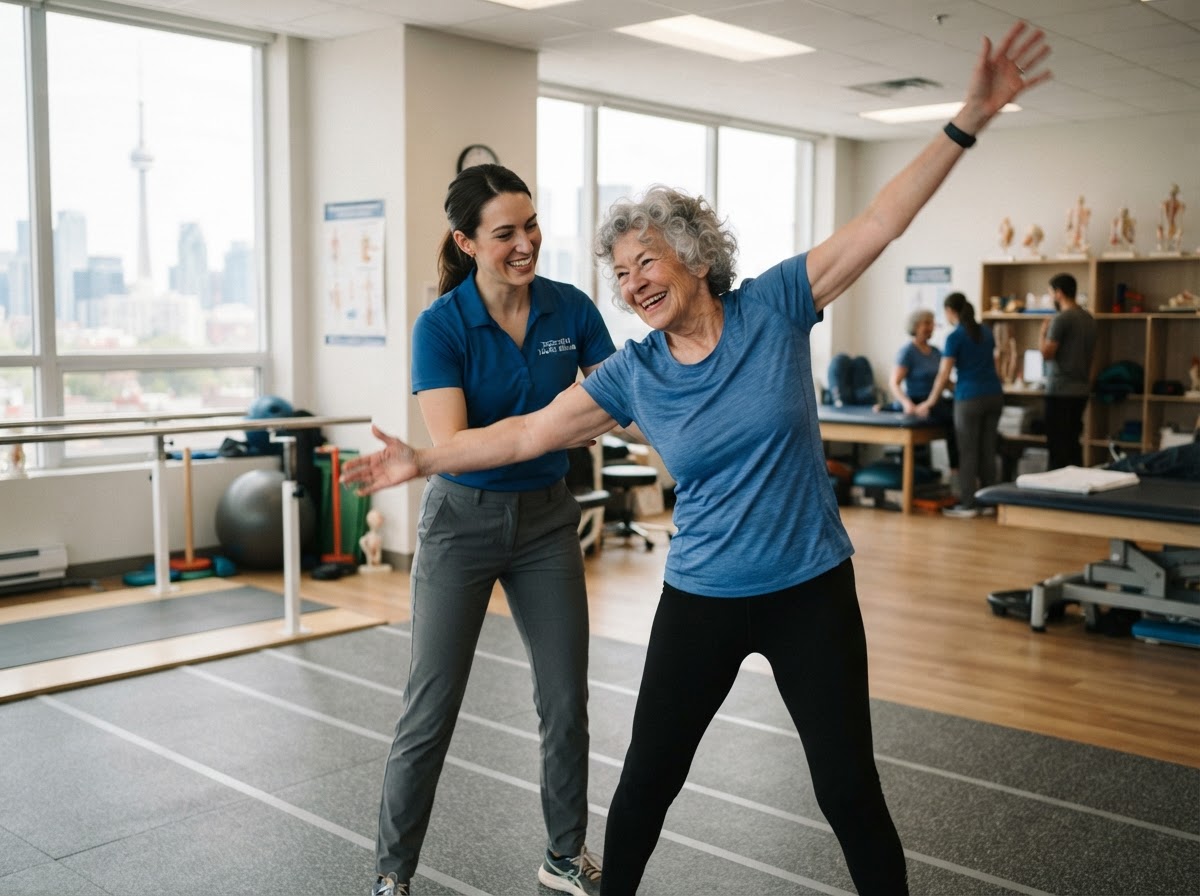
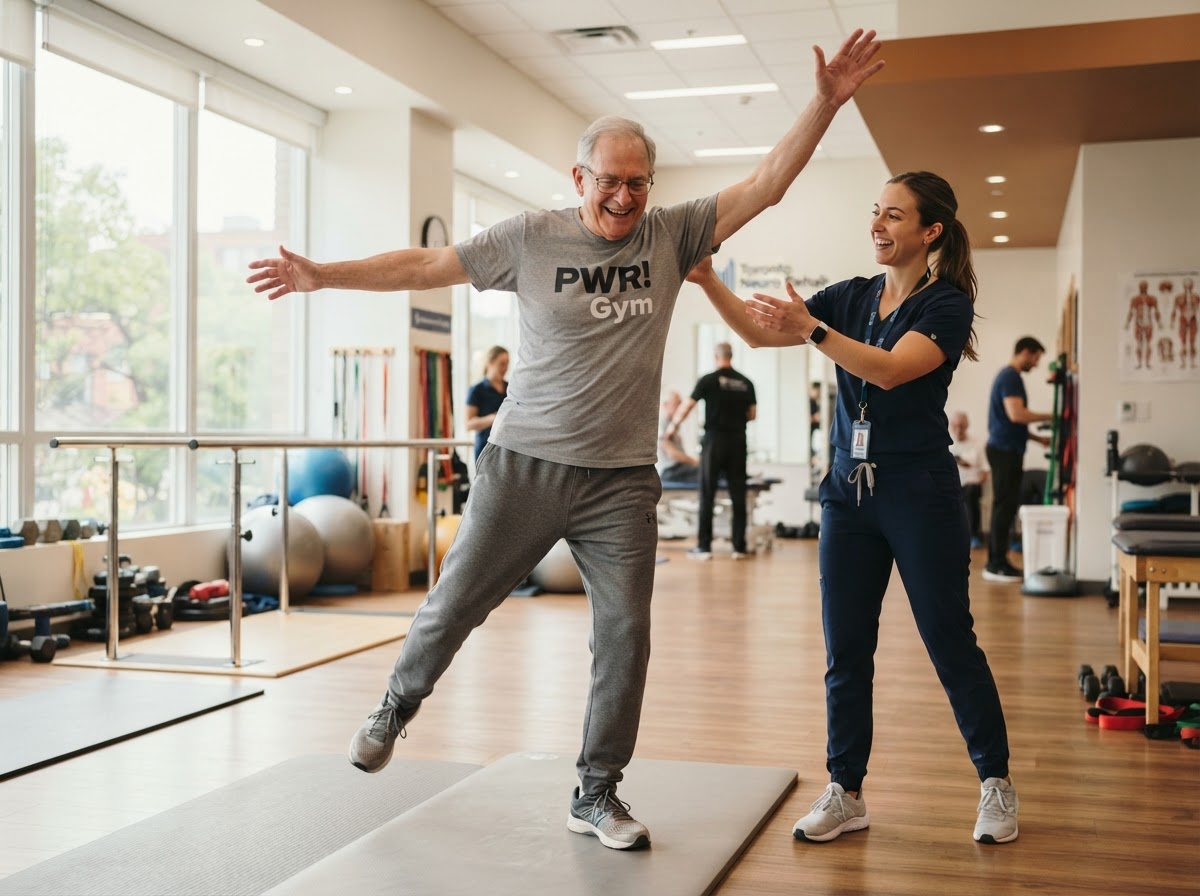
Our program is anchored in the evidence-based LSVT BIG protocol and the PWR! (Parkinson Wellness Recovery) Moves framework. The core insight is counter-intuitive: people with Parkinson's perceive their movements as normal-sized even when they have become small and shuffling. By deliberately training large, fast, whole-body movements, we recalibrate the brain's internal sense of amplitude and rewire neural feedback loops — a process driven by neuro-plasticity.
Treatment is intensive and goal-driven. The full LSVT BIG protocol runs 16 sessions over four weeks, with daily homework and carryover drills that translate big movements into everyday tasks such as turning in bed, rising from a chair and walking through a doorway. We also layer dual-task training and rhythmic auditory cueing to address freezing of gait and the cognitive load of walking.
What it may help with
Conditions We Treat
- Idiopathic Parkinson's disease and atypical Parkinsonism
- Bradykinesia and small, shuffling movements (festination)
- Freezing of gait (FOG)
- Rigidity and reduced trunk rotation
- Postural instability and fall risk
- Loss of automatic movement and dual-task difficulty
- Decline in speech and facial expression (hypomimia)
Common Symptoms
- Tremors & limb rigidity
- Short shuffling steps (festination)
- Freezing of gait (FOG)
- Stooped posture & micro-movements
Relevant areas addressed
Whole-Body Amplitude System
Large, whole-body movements retrain the brain's internal scaling of effort so that everyday movements regain their full size and speed.
Trunk & Axial Rotation
Thoracic and lumbar rotation addressed to counter the rigid, stooped posture and improve bed mobility and turning.
Lower Limb & Gait Drivers
Hip flexors, gluteals and calves trained for stride length, heel-strike and forward progression during walking.
Postural & Balance Musculature
Core and extensor groups that hold the body upright and power reactive balance responses to prevent falls.
Upper Extremity Reach
Arm swing and overhead reach retrained to restore reciprocal, coordinated whole-body movement.
Main treatment methods offered
LSVT BIG 16-session amplitude protocol
A targeted, evidence-based technique tailored to your assessment and progressed as your tolerance improves.
PWR! (Parkinson Wellness Recovery) Moves
Delivered by a registered therapist and integrated with your broader rehabilitation plan.
Dual-task cognitive gait training
Combined with hands-on care and a structured home routine for lasting, functional results.
Rhythmic auditory cueing
Adjusted each session to your response so treatment stays effective and comfortable.
Realistic outcomes & limitations
What You Can Expect
Restored stride length and walking speed
A realistic, evidence-supported outcome you can expect from consistent treatment and home adherence.
Dramatically improved balance & confidence
Most patients notice meaningful change within the first several sessions.
Reduced freezing episodes
Sustained by the home program and periodic maintenance once the initial goals are met.
Greater ease with daily motor tasks
Confirmed by objective re-measurement throughout your program.
Honest Limitations
- Results depend on consistent home exercise and adherence to the prescribed program.
- Acute inflammation, recent surgery or new symptoms may require modification or medical co-management.
- Outcomes vary by individual; we set realistic milestones after your initial assessment.
Assessment, duration & treatment process
Initial Assessment (45–60 minutes)
A thorough baseline of movement amplitude, gait, balance, turning and dual-task ability. We confirm diagnosis suitability, explain the LSVT BIG protocol and set personalized carryover goals.
Intensive Protocol (4 weeks, 16 sessions)
Four sessions per week of high-amplitude whole-body training, daily homework and functional carryover drills. Sessions are demanding but closely supervised and adapted to your stage.
Maintenance & PWR! Continuation
After the intensive block, we transition to ongoing PWR!-based maintenance to sustain neuroplastic gains and monitor progression as the disease evolves.
Precautions & possible side effects
Suitable For
- Individuals with Parkinson's disease at any stage.
- Patients motivated for an intensive, high-effort program.
- Those experiencing freezing, shuffling gait or reduced movement size.
- People seeking a certified, disease-specific protocol rather than generic exercise.
Precautions
- Treatment is timed around your medication 'on' periods for best motor response.
- Adjust intensity during medication changes or off-periods to avoid fatigue.
- Advanced postural instability requires close spotting and fall-prevention gear.
- Report dizziness, new freezing patterns or falls for immediate re-assessment.
Common questions & booking
Ready to take your first step?
Book your initial consultation at One Step Ahead Mobility in Toronto. No referral required.
Take Your First Step Toward Lasting Relief
Every treatment at One Step Ahead Mobility begins with a thorough assessment and a clear, personalized plan. No referral required — direct billing available.