Post-Stroke Motor Relearning & CIMT
Rebuilding neural pathways and arm/leg function following ischemic or hemorrhagic stroke
Intensive stroke rehabilitation utilizing Constraint-Induced Movement Therapy (CIMT), task-oriented motor retraining, and functional balance restoration.
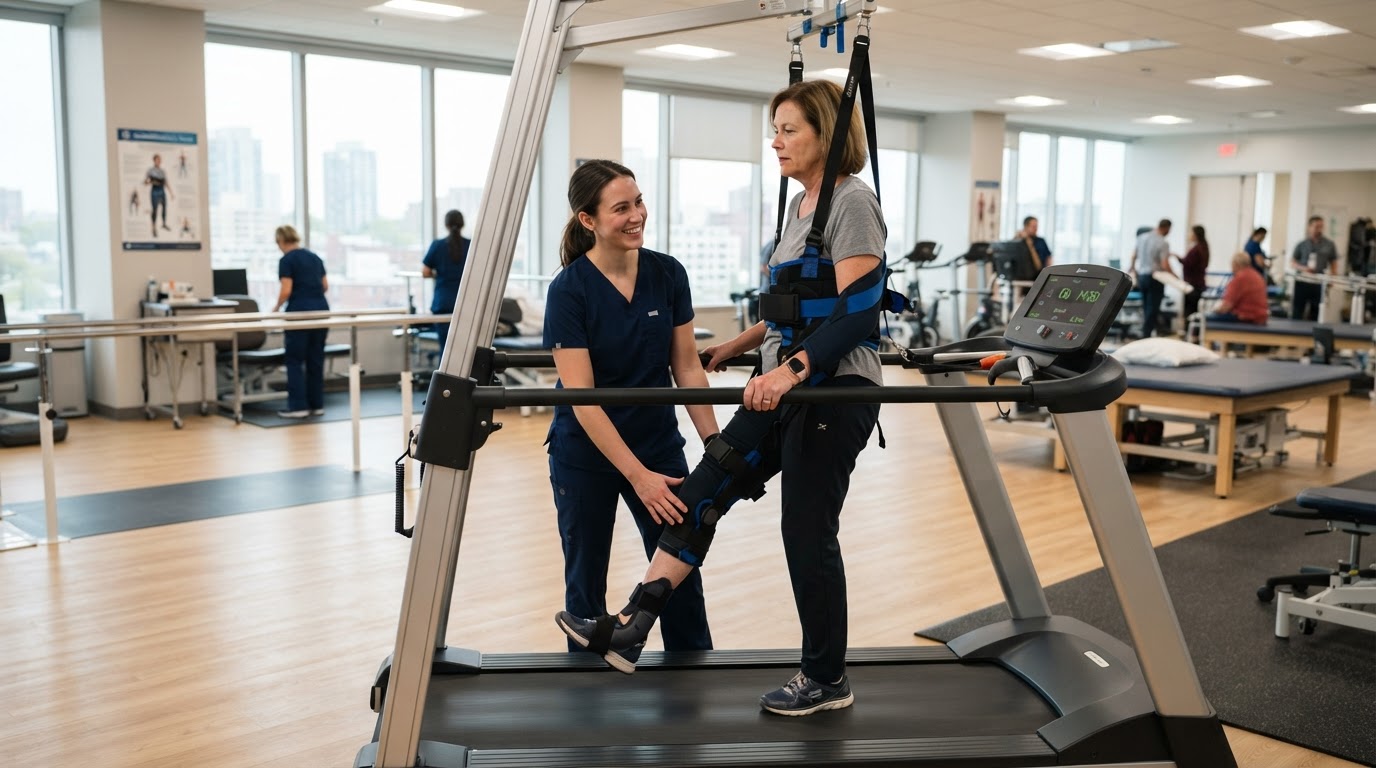

What it is & how it works
A stroke occurs when blood flow to part of the brain is interrupted (ischemic) or a vessel ruptures (hemorrhagic), depriving neurons of oxygen and causing cell death in the affected region. The functional consequences — hemiparesis (one-sided weakness), loss of coordination, foot drop, spasticity and reduced independence — depend on the stroke's location and size. Physiotherapy is the cornerstone of post-stroke recovery, beginning in acute hospital and continuing for months or years in the community.
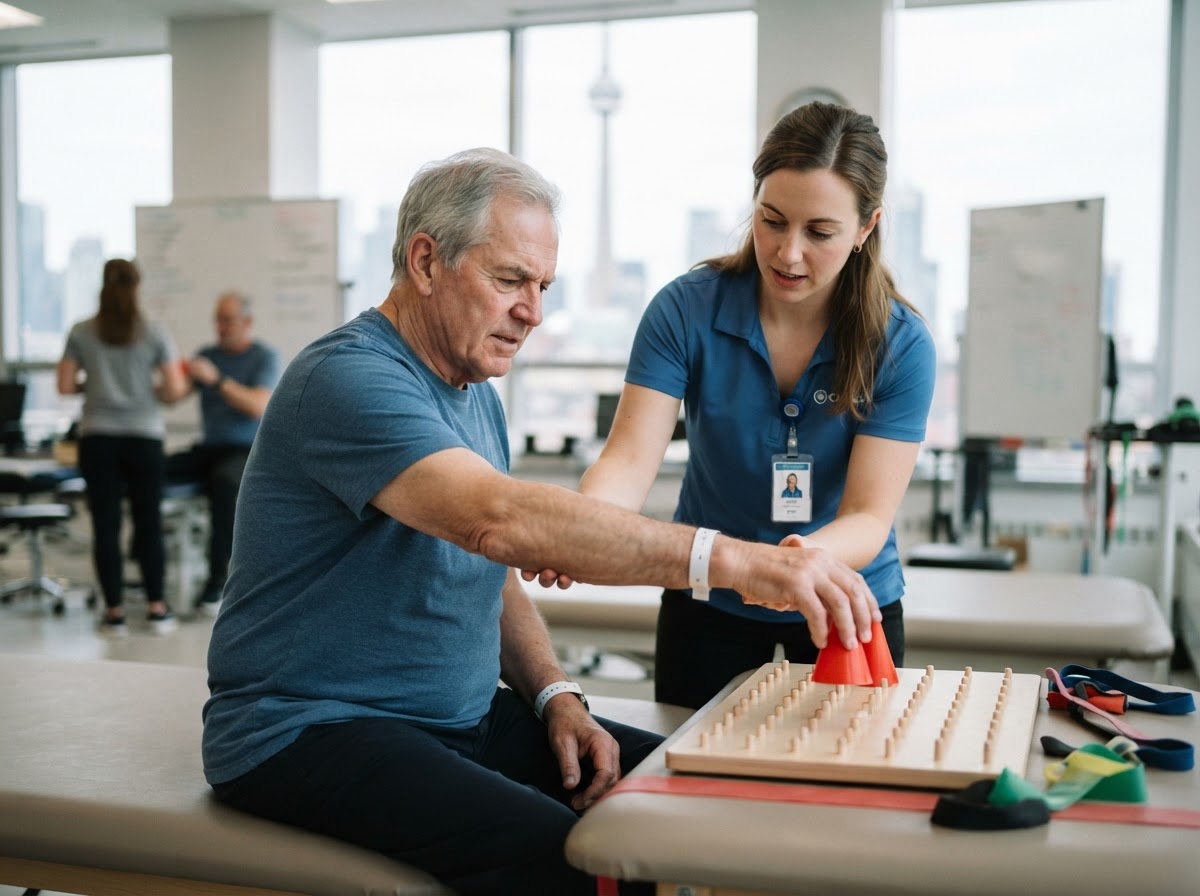
Recovery is powered by neuro-plasticity: the brain's ability to form new connections that re-route function from damaged to healthy tissue. This requires repetitive, task-specific, high-intensity practice of the affected movements — exactly what our program delivers. We use Constraint-Induced Movement Therapy (CIMT) to overcome 'learned non-use', neuromuscular electrical stimulation (NMES) to activate weak muscles, and progressive weight-bearing and balance drills to rebuild the standing and walking patterns that stroke often disrupts.
Each program is staged to the individual. Acute recovery emphasizes tone management, joint protection and early upright mobility; later phases focus on gait re-education, stair training, reach and grasp, and dual-task balance. Family and caregivers are educated as partners, because carryover at home is what consolidates the gains made in clinic.
What it may help with
Conditions We Treat
- Ischemic and hemorrhagic stroke recovery
- Hemiparesis and hemiplegia
- Foot drop and gait asymmetry
- Spasticity and joint contracture prevention
- Loss of arm reach, grasp and fine motor control
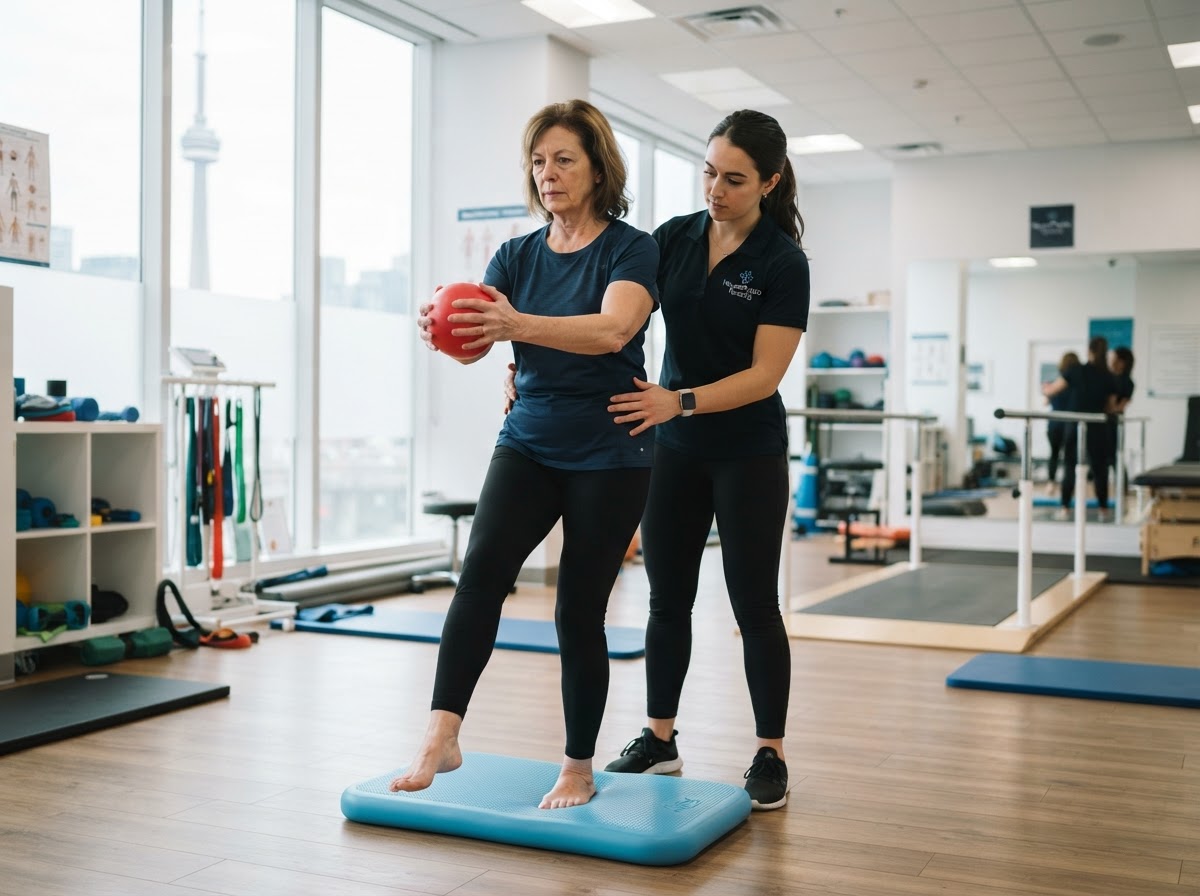
- Impaired sitting and standing balance
- Reduced independence in self-care and mobility
Common Symptoms
- Hemiparesis (one-sided weakness)
- Foot drop & leg dragging
- Arm & hand spasticity
- Loss of coordination & postural control
Relevant areas addressed
Affected Hemispheric Limb Chains
The weakened arm and leg on the affected side, retrained through repetitive, task-specific loading to rewire motor pathways.
Glenohumeral & Scapular Complex
Shoulder muscles at high risk of subluxation and impingement after stroke, protected and progressively strengthened.
Ankle Dorsiflexors & Foot Drop
Tibialis anterior and ankle stabilizers addressed with NMES and gait drills to clear the foot during walking.
Trunk & Core Stability
Sitting and standing balance muscles that underpin transfers, reaching and safe upright mobility.
Hand & Fine Motor Group
Intrinsic hand muscles trained for grasp, pinch and the dexterity needed for self-care and writing.
Main treatment methods offered
Constraint-Induced Movement Therapy (CIMT)
A targeted, evidence-based technique tailored to your assessment and progressed as your tolerance improves.
Neuromuscular electrical stimulation (NMES)
Delivered by a registered therapist and integrated with your broader rehabilitation plan.
Weight-bearing & standing balance drills
Combined with hands-on care and a structured home routine for lasting, functional results.
Gait speed & stair training
Adjusted each session to your response so treatment stays effective and comfortable.
Realistic outcomes & limitations
What You Can Expect
Improved arm reach and grasp
A realistic, evidence-supported outcome you can expect from consistent treatment and home adherence.
Smoother walking pattern
Most patients notice meaningful change within the first several sessions.
Higher independence in self-care
Sustained by the home program and periodic maintenance once the initial goals are met.
Reduced joint contractures
Confirmed by objective re-measurement throughout your program.
Honest Limitations
- Results depend on consistent home exercise and adherence to the prescribed program.
- Acute inflammation, recent surgery or new symptoms may require modification or medical co-management.
- Outcomes vary by individual; we set realistic milestones after your initial assessment.
Assessment, duration & treatment process
Initial Assessment (45–60 minutes)
A detailed motor, sensory, tone and balance assessment. We review imaging and discharge notes, set functional goals and design a repetitive task-oriented plan.
Treatment Sessions (45–60 minutes)
Intensive, high-repetition practice of affected movements, supported by NMES, weight-bearing and balance drills. Family is taught safe assist techniques.
Long-Term Continuation
Significant recovery can occur for months or years; we offer ongoing maintenance to keep advancing motor function and independence.
Precautions & possible side effects
Suitable For
- Stroke survivors transitioning from hospital to community living.
- Patients with residual limb weakness or gait impairment.
- Those seeking continued recovery months or years post-stroke.
- Caregivers wanting guidance on safe home assistance.
Precautions
- Early post-discharge care is coordinated with your hospital rehab team.
- Shoulder handling is careful to avoid subluxation and impingement pain.
- Spasticity and contractures may require physician co-management.
- Report new weakness, swelling or pain immediately for reassessment.
Common questions & booking
Ready to take your first step?
Book your initial consultation at One Step Ahead Mobility in Toronto. No referral required.
Take Your First Step Toward Lasting Relief
Every treatment at One Step Ahead Mobility begins with a thorough assessment and a clear, personalized plan. No referral required — direct billing available.