Shoulder Impingement & Rotator Cuff Rehab
Restoring overhead reach, rotator cuff strength, and scapular stability without surgery
Comprehensive shoulder evaluation correcting scapulohumeral rhythm, relieving rotator cuff impingement, bursitis, and adhesive capsulitis (frozen shoulder).
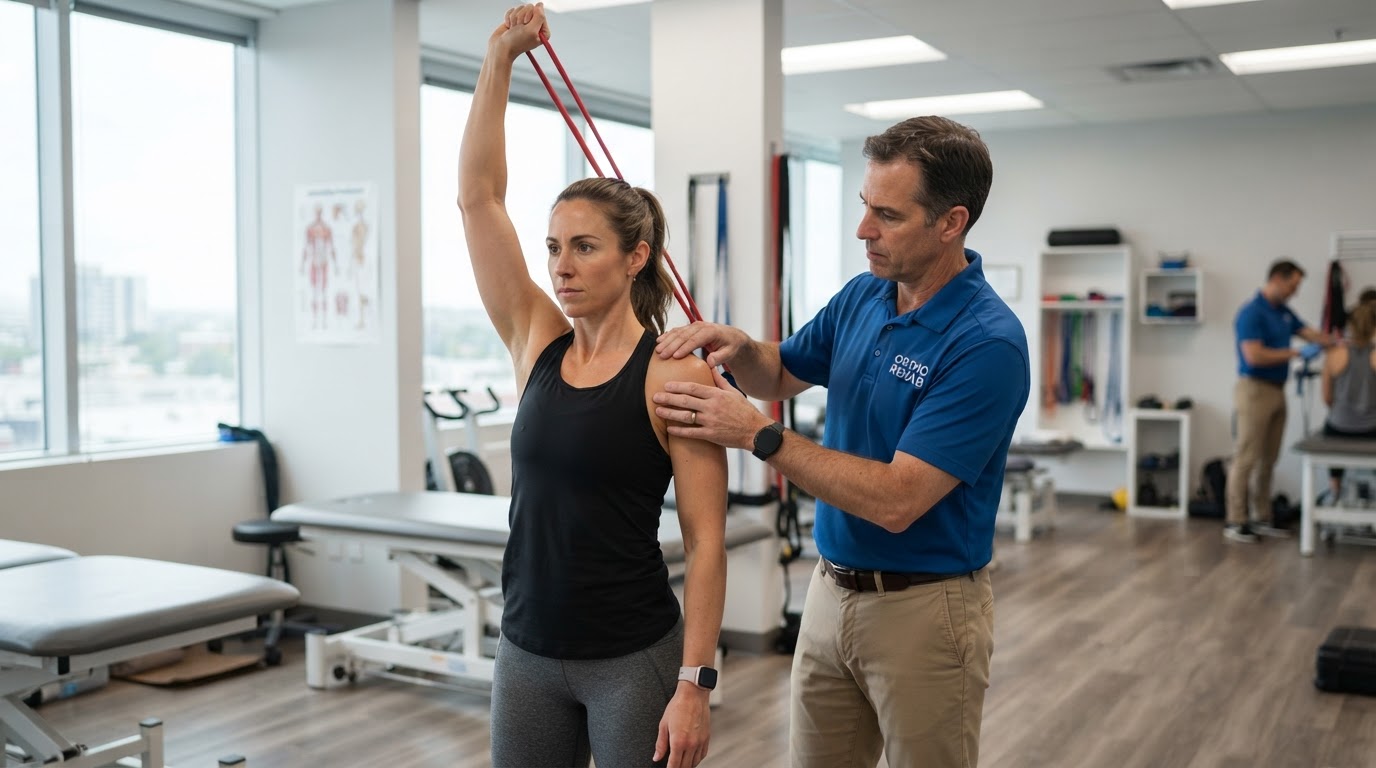

What it is & how it works
The shoulder is the most mobile joint in the body, and that mobility comes at the cost of stability — making it highly prone to impingement, rotator cuff injury, bursitis and adhesive capsulitis (frozen shoulder). Shoulder pain typically shows itself as discomfort when reaching overhead or behind the back, night aching when lying on the affected side, and a progressive loss of reach that can curtail work, sport and sleep.
Our evaluation examines the entire scapulohumeral rhythm — the coordinated movement of the shoulder blade and ball-and-socket joint — because most shoulder pain originates from poor mechanics rather than the joint alone. We use glenohumeral joint mobilization to restore range, progressive rotator cuff loading to rebuild strength, and scapular motor-control drills to retrain the smooth, pain-free movement pattern.
Most impingements and partial rotator cuff tears respond exceptionally well to this conservative approach, often avoiding surgery. We pair hands-on care with a home program of progressive resistance and posture work so the relief translates into confident, overhead function — whether that means reaching a top shelf, swimming, or sleeping comfortably again.
What it may help with
Conditions We Treat
- Rotator cuff tendinopathy and partial tears
- Subacromial impingement and bursitis
- Adhesive capsulitis (frozen shoulder)
- Shoulder instability and labral strain
- Overhead-activity and throwing injuries
- Post-surgical rotator cuff repair rehab
Common Symptoms
- Pain when reaching overhead or behind back
- Rotator cuff tendinitis / tears
- Frozen shoulder joint stiffness
- Nighttime shoulder aching
Relevant areas addressed
Rotator Cuff Group
Supraspinatus, infraspinatus, teres minor and subscapularis — the four muscles that center and stabilize the shoulder joint.
Scapular Stabilizers
Serratus anterior and lower trapezius retrained to restore the smooth shoulder-blade rhythm that prevents impingement.
Glenohumeral Joint Capsule
The joint capsule mobilized to restore range in stiff, frozen shoulders.
Deltoid & Overhead Drivers
The large shoulder muscle loaded progressively for pain-free overhead reach and strength.
Main treatment methods offered
Glenohumeral joint mobilization
A targeted, evidence-based technique tailored to your assessment and progressed as your tolerance improves.
Rotator cuff progressive loading
Delivered by a registered therapist and integrated with your broader rehabilitation plan.
Scapular motor control drills
Combined with hands-on care and a structured home routine for lasting, functional results.
Dry needling & manual therapy
Adjusted each session to your response so treatment stays effective and comfortable.
Realistic outcomes & limitations
What You Can Expect
Pain-free reaching overhead
A realistic, evidence-supported outcome you can expect from consistent treatment and home adherence.
Restored shoulder strength and sleep comfort
Most patients notice meaningful change within the first several sessions.
Reduced risk of surgical repair
Sustained by the home program and periodic maintenance once the initial goals are met.
Honest Limitations
- Results depend on consistent home exercise and adherence to the prescribed program.
- Acute inflammation, recent surgery or new symptoms may require modification or medical co-management.
- Outcomes vary by individual; we set realistic milestones after your initial assessment.
Assessment, duration & treatment process
Initial Assessment (45–60 minutes)
A detailed examination of shoulder range, strength, impingement signs and scapular rhythm to diagnose and plan.
Treatment Sessions (30–60 minutes)
Joint mobilization, manual therapy, dry needling and progressive cuff loading, with a structured home program.
Return to Overhead
We progress to overhead and sport-specific loading, testing function before return to full activity.
Precautions & possible side effects
Suitable For
- Swimmers, tennis players and tradespeople with overuse pain.
- Patients with impingement or partial rotator cuff tears.
- Those with frozen shoulder or restricted reach.
- Post-surgical patients cleared for rehab.
Precautions
- Recent tears are imaged and managed with physician input as needed.
- Frozen shoulder flares are managed with gentle progression.
- Overhead loading is introduced only when mechanics allow.
- Night pain is tracked to gauge healing progress.
Common questions & booking
Ready to take your first step?
Book your initial consultation at One Step Ahead Mobility in Toronto. No referral required.
Take Your First Step Toward Lasting Relief
Every treatment at One Step Ahead Mobility begins with a thorough assessment and a clear, personalized plan. No referral required — direct billing available.