Sports Injury & Return-to-Play Testing
Accelerating recovery from sprains, tears, and strain injuries for athletes of all levels
Evidence-based sports rehabilitation combining acute swelling control, progressive strength loading, plyometrics, and return-to-sport functional testing.

What it is & how it works
Sports injuries — ACL and MCL knee sprains, ankle inversions, hamstring and calf tears, shin splints and runner's knee — demand more than symptom relief. They demand a disciplined, criterion-based return to play that rebuilds the injured tissue and prevents the re-injury that too often follows a premature comeback. Our sports program is built around that standard.
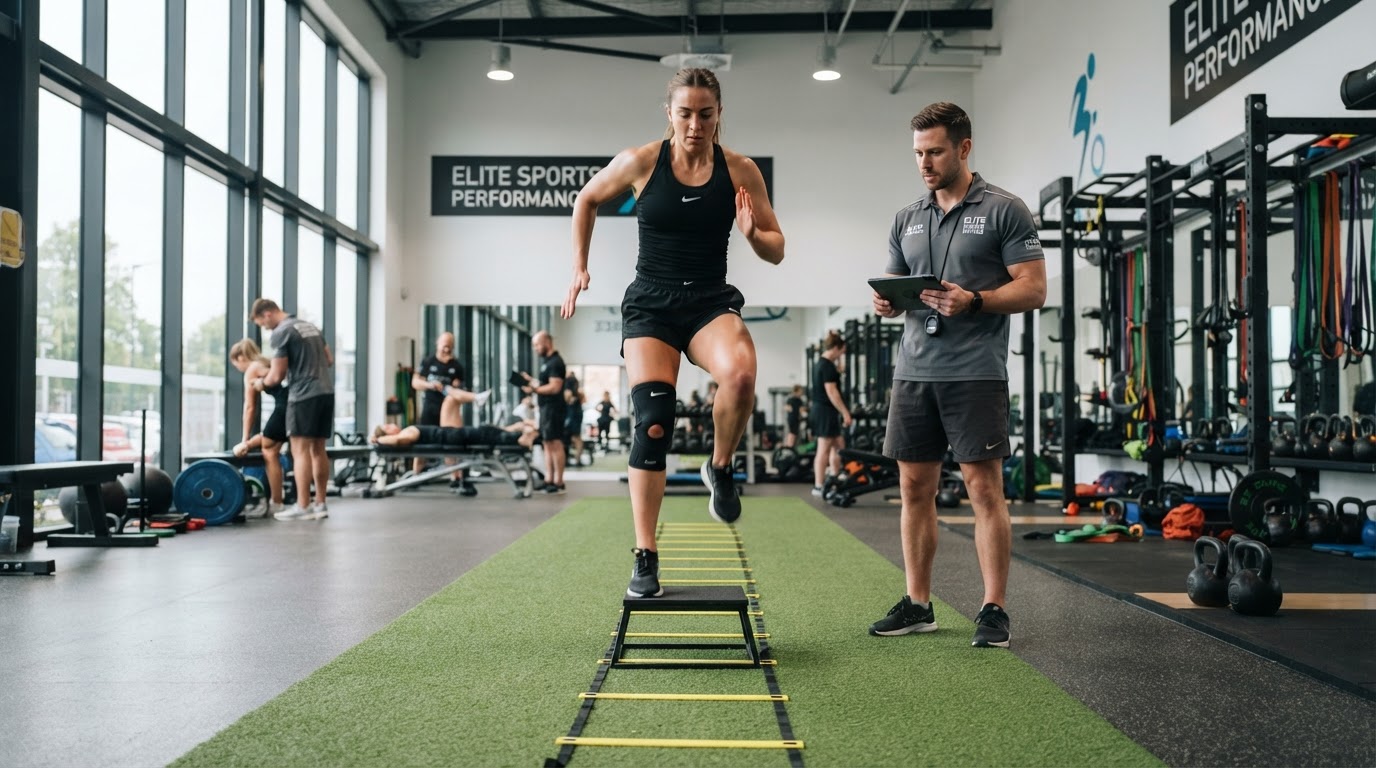
We combine acute swelling control, progressive strength loading, plyometrics and functional return-to-sport testing. Objective measures — force-plate and jump testing, agility drills, and bilateral strength comparison — determine readiness rather than a calendar date. Blood Flow Restriction (BFR) training lets us build strength with light loads while a healing ligament or tendon is protected, and IASTM and sports manual therapy accelerate soft-tissue recovery.
The result is a faster and, crucially, safer return to competitive play, with re-injury risk reduced by ensuring equal bilateral strength and full functional capacity before clearance. We also address the movement flaws that caused the injury so the same problem does not recur.
What it may help with
Conditions We Treat
- ACL, MCL and knee ligament sprains
- Ankle inversion sprains and instability
- Hamstring and calf muscle strains
- Shin splints and runner's knee (patellofemoral pain)
- Achilles and tendon injuries
- Acute and overuse sports injuries
Common Symptoms
- ACL/MCL knee ligament sprains
- Ankle inversion sprains
- Hamstring & calf strain tears
- Shin splints & runner's knee
Relevant areas addressed
Knee & Ligament Complex
The ACL, MCL and surrounding stabilizers rebuilt with progressive loading and, where suitable, BFR training.
Ankle & Lower Leg
Sprained ligaments and calf/Achilles units retrained for strength, power and proprioception.
Hamstring & Thigh
Muscle strains rehabilitated with eccentric loading to restore length and prevent re-tear.
Whole-Chain Power System
Plyometric and agility training to rebuild explosive, sport-ready function.
Main treatment methods offered
Agility & plyometric drills
A targeted, evidence-based technique tailored to your assessment and progressed as your tolerance improves.
IASTM & sports manual therapy
Delivered by a registered therapist and integrated with your broader rehabilitation plan.
Force plate / jump testing assessment
Combined with hands-on care and a structured home routine for lasting, functional results.
Blood flow restriction (BFR) training
Adjusted each session to your response so treatment stays effective and comfortable.
Realistic outcomes & limitations
What You Can Expect
Faster return to competitive play
A realistic, evidence-supported outcome you can expect from consistent treatment and home adherence.
Prevention of re-injury
Most patients notice meaningful change within the first several sessions.
Equalized bilateral leg strength
Sustained by the home program and periodic maintenance once the initial goals are met.
Honest Limitations
- Results depend on consistent home exercise and adherence to the prescribed program.
- Acute inflammation, recent surgery or new symptoms may require modification or medical co-management.
- Outcomes vary by individual; we set realistic milestones after your initial assessment.
Assessment, duration & treatment process
Initial Assessment (45–60 minutes)
A sport-specific exam of the injured tissue, strength, movement quality and the mechanics that caused the injury.
Rehab & Strengthening (30–60 minutes)
Swelling control, progressive loading, plyometrics and BFR, with sport-specific drills and a home routine.
Return-to-Sport Testing
Objective jump, agility and bilateral-strength testing determines readiness for full play.
Precautions & possible side effects
Suitable For
- Runners, soccer and basketball players, golfers.
- Active gym-goers with acute or overuse injuries.
- Athletes wanting a safe, criterion-based return to sport.
- People seeking to prevent re-injury.
Precautions
- Return to sport is test-based, not date-based.
- Recent surgical repairs are cleared by the surgeon first.
- BFR is screened for vascular suitability.
- Re-injury risk is lowered by equalizing bilateral strength.
Common questions & booking
Ready to take your first step?
Book your initial consultation at One Step Ahead Mobility in Toronto. No referral required.
Take Your First Step Toward Lasting Relief
Every treatment at One Step Ahead Mobility begins with a thorough assessment and a clear, personalized plan. No referral required — direct billing available.