Lumbar Stenosis Boot Camp
Flexion-based, walking-tolerance program proven to relieve spinal stenosis without surgery
A structured, evidence-based boot camp using flexion-biased exercises, manual therapy, and graded walking to relieve neurogenic claudication and restore standing tolerance.
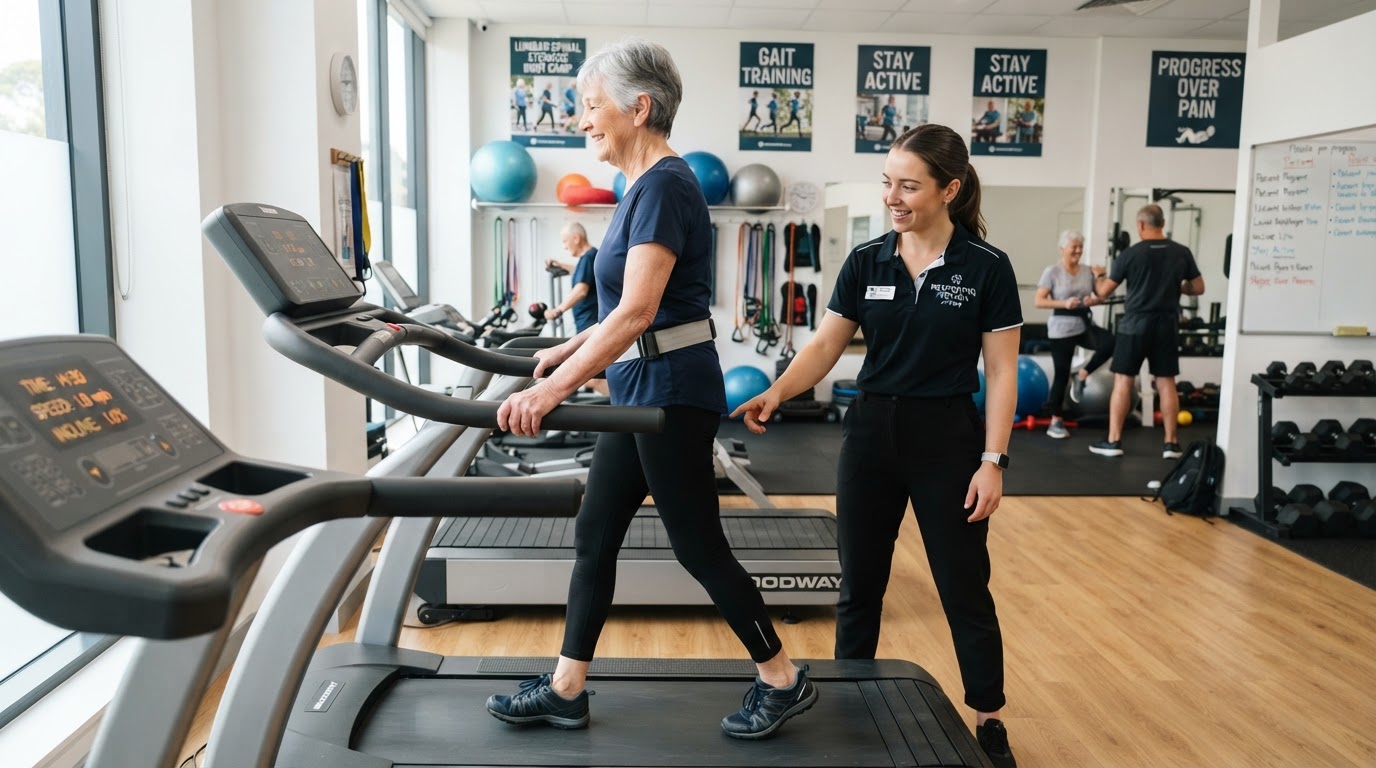

What it is & how it works
Lumbar spinal stenosis is the age-related narrowing of the spinal canal that compresses the nerves travelling to the legs. Its hallmark is neurogenic claudication — leg pain, heaviness, cramping or numbness that comes on with standing and walking, eases when sitting or leaning forward, and progressively shortens the distance a person can walk. Many assume surgery is the only answer; for most, it is not.
The Stenosis Boot Camp is a structured, evidence-based program that uses flexion-biased exercises, manual therapy and graded treadmill walking to relieve nerve compression and rebuild walking tolerance. Because flexion opens the spinal canal, the program teaches the postures and movements that decompress the nerves, while graded walking progressively increases the distance you can cover pain-free.
Research shows this conservative protocol produces gains in walking tolerance and pain relief comparable to surgery for many patients, making it the appropriate first step. We provide a complete independent home-management plan so the gains extend well beyond the clinic and the need for decompression surgery is often delayed or avoided entirely.
What it may help with
Conditions We Treat
- Lumbar spinal stenosis
- Neurogenic claudication (leg pain with walking)
- Age-related spinal canal narrowing
- Reduced walking tolerance from leg symptoms
- Leg numbness or heaviness with standing
Common Symptoms
- Leg pain or heaviness with standing/walking
- Relief when sitting or leaning forward
- Cramping that limits distance walked
- Numbness or tingling in the legs
Relevant areas addressed
Lumbar Spinal Canal
The narrowed canal decompressed through flexion-biased postures that open the space around the nerves.
Core & Hip Flexors
Flexion-supporting muscles strengthened to sustain a decompressing lumbar posture.
Leg & Walking Muscles
Conditioned with a graded treadmill program to rebuild walking distance and tolerance.
Postural System
Posture and body mechanics retrained to maintain relief in daily standing and walking.
Main treatment methods offered
Flexion-biased lumbar exercises
A targeted, evidence-based technique tailored to your assessment and progressed as your tolerance improves.
Manual therapy & mobilization
Delivered by a registered therapist and integrated with your broader rehabilitation plan.
Graded treadmill walking program
Combined with hands-on care and a structured home routine for lasting, functional results.
Core & hip strengthening
Adjusted each session to your response so treatment stays effective and comfortable.
Realistic outcomes & limitations
What You Can Expect
Longer pain-free walking distance
A realistic, evidence-supported outcome you can expect from consistent treatment and home adherence.
Reduced leg pain and cramping
Most patients notice meaningful change within the first several sessions.
Avoid or delay decompression surgery
Sustained by the home program and periodic maintenance once the initial goals are met.
Independent home management plan
Confirmed by objective re-measurement throughout your program.
Honest Limitations
- Results depend on consistent home exercise and adherence to the prescribed program.
- Acute inflammation, recent surgery or new symptoms may require modification or medical co-management.
- Outcomes vary by individual; we set realistic milestones after your initial assessment.
Assessment, duration & treatment process
Initial Assessment (45–60 minutes)
We confirm stenosis, assess walking tolerance and posture, and design the flexion-biased boot-camp plan.
Boot Camp Sessions (30–60 minutes)
Flexion exercises, manual therapy and graded treadmill walking, progressing distance as tolerated.
Independent Home Plan
We equip you with a complete self-management routine so gains continue without dependence on the clinic.
Precautions & possible side effects
Suitable For
- Adults with lumbar spinal stenosis and neurogenic claudication.
- Those whose walking is limited by leg pain or heaviness.
- People wanting to avoid or delay decompression surgery.
- Patients seeking a self-managed, durable solution.
Precautions
- Progressive neurological deficit may require surgical consult.
- Flexion is emphasized; extension is minimized initially.
- Walking is graded to stay below the symptom threshold.
- The home plan is designed for long-term independence.
Common questions & booking
Ready to take your first step?
Book your initial consultation at One Step Ahead Mobility in Toronto. No referral required.
Take Your First Step Toward Lasting Relief
Every treatment at One Step Ahead Mobility begins with a thorough assessment and a clear, personalized plan. No referral required — direct billing available.