Hip Pain, Bursitis & Impingement Care
Addressing trochanteric bursitis, hip labral tears, FAI impingement, and gluteal tendinopathy
Thorough biomechanical examination of hip joint capsule, gluteus medius strength, pelvic alignment, and stride kinematics.

What it is & how it works
Hip pain is common across ages and activities, from outer-side discomfort when lying in bed to groin pinching during squats. The usual suspects include greater trochanteric bursitis (lateral hip pain), gluteal tendinopathy, hip impingement (FAI), labral tears and the cumulative effect of running, walking and sitting on a joint that bears the body's weight through every step.
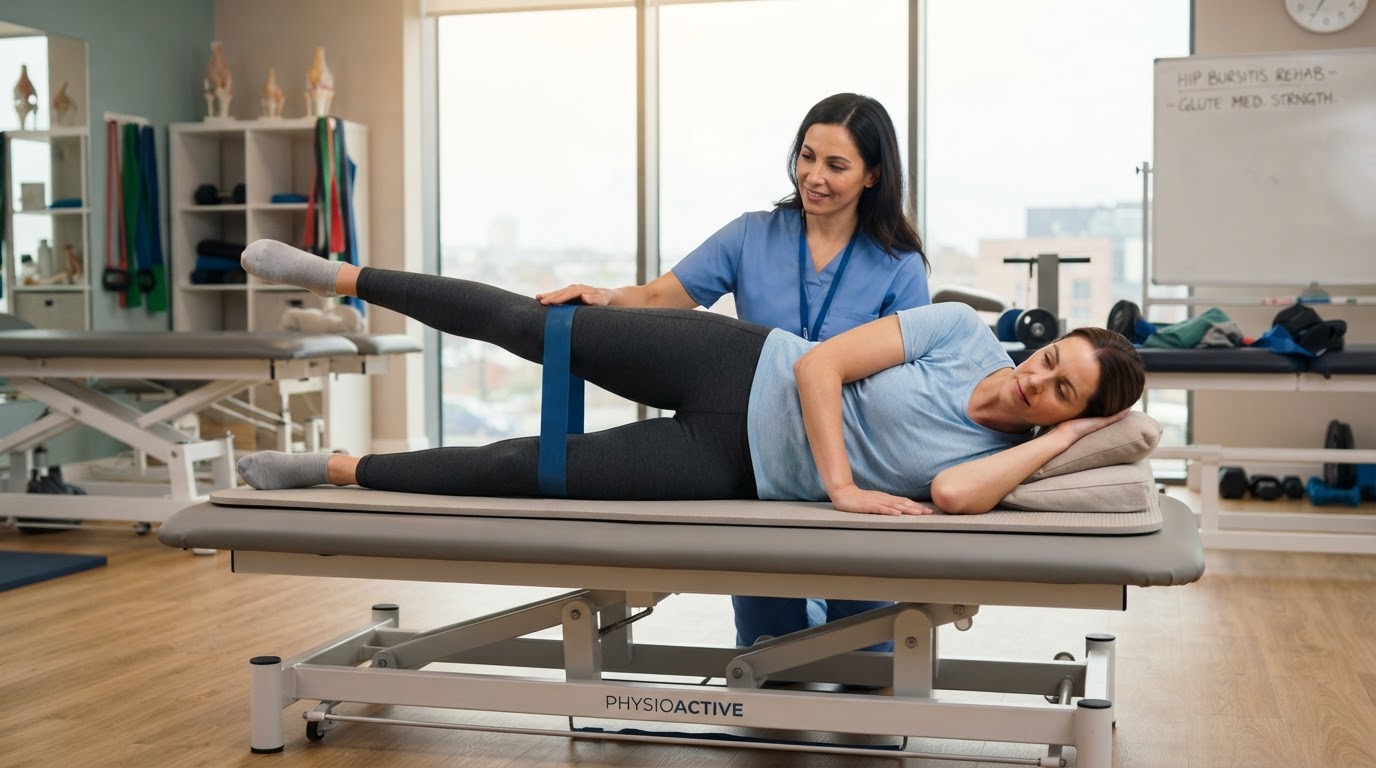
Our assessment examines the whole hip: joint capsule mobility, gluteus medius strength (the key lateral stabilizer), pelvic alignment, and stride kinematics. We restore balance with pelvic alignment and joint distraction, manage the load on an irritated gluteal tendon, release hypertonic muscles with dry needling, and retrain gait so the hip is loaded through its healthiest mechanics.
Most lateral hip pain and many impingement symptoms resolve with this conservative approach, restoring comfortable sleep on your side and pinch-free walking or running. Where running is the goal, we progress to plyometric and load-management drills that rebuild efficiency and protect the tendon long-term.
What it may help with
Conditions We Treat
- Greater trochanteric bursitis and lateral hip pain
- Gluteal tendinopathy
- Femoroacetabular impingement (FAI)
- Hip labral tears and strain
- Hip flexor tendinopathy
- Running-related hip and groin pain
Common Symptoms
- Outer hip pain when lying on side
- Groin pinching during squats or sitting
- Gluteal muscle tightness
- Hip joint clicking or stiffness
Relevant areas addressed
Gluteus Medius & Lateral Stabilizers
The key hip stabilizer loaded progressively to support the joint and relieve lateral pain.
Hip Joint Capsule
Mobilized with distraction to restore range and ease impingement-type pain.
Gluteal Tendon Insertion
Load-managed and released to resolve tendinopathy and bursitis.
Pelvic Alignment & Gait
Pelvic symmetry and stride mechanics retrained so the hip is loaded through its healthiest path.
Main treatment methods offered
Pelvic alignment & joint distraction
A targeted, evidence-based technique tailored to your assessment and progressed as your tolerance improves.
Gluteal tendon load management
Delivered by a registered therapist and integrated with your broader rehabilitation plan.
Dry needling
Combined with hands-on care and a structured home routine for lasting, functional results.
Gait retraining
Adjusted each session to your response so treatment stays effective and comfortable.
Realistic outcomes & limitations
What You Can Expect
Restored sleeping comfort on your side
A realistic, evidence-supported outcome you can expect from consistent treatment and home adherence.
Pinch-free hip flexion and walking
Most patients notice meaningful change within the first several sessions.
Improved running efficiency
Sustained by the home program and periodic maintenance once the initial goals are met.
Honest Limitations
- Results depend on consistent home exercise and adherence to the prescribed program.
- Acute inflammation, recent surgery or new symptoms may require modification or medical co-management.
- Outcomes vary by individual; we set realistic milestones after your initial assessment.
Assessment, duration & treatment process
Initial Assessment (45–60 minutes)
A biomechanical exam of hip range, strength, tenderness, pelvic alignment and gait to diagnose the driver.
Treatment Sessions (30–60 minutes)
Joint distraction, gluteal loading, dry needling and gait retraining, with a home routine and load guidance.
Return to Running
For runners, we progress to plyometric and load-management drills to rebuild efficient, pain-free performance.
Precautions & possible side effects
Suitable For
- Runners, walkers and active adults with hip pain.
- Patients with trochanteric bursitis or lateral hip pain.
- Those with groin pinching or impingement symptoms.
- People wanting comfortable side-sleeping again.
Precautions
- Tendinopathy flares are managed with careful load progression.
- Suspected labral tears may be imaged before aggressive loading.
- Side-sleeping positioning is coached to relieve night pain.
- Running load is reintroduced gradually to protect the tendon.
Common questions & booking
Ready to take your first step?
Book your initial consultation at One Step Ahead Mobility in Toronto. No referral required.
Take Your First Step Toward Lasting Relief
Every treatment at One Step Ahead Mobility begins with a thorough assessment and a clear, personalized plan. No referral required — direct billing available.