Elbow, Wrist & Carpal Tunnel Rehab
Targeted care for Tennis Elbow, Golfer's Elbow, Carpal Tunnel, and wrist sprains
Focused upper extremity therapy correcting forearm tendon overload, median nerve compression, and wrist joint biomechanics.

What it is & how it works
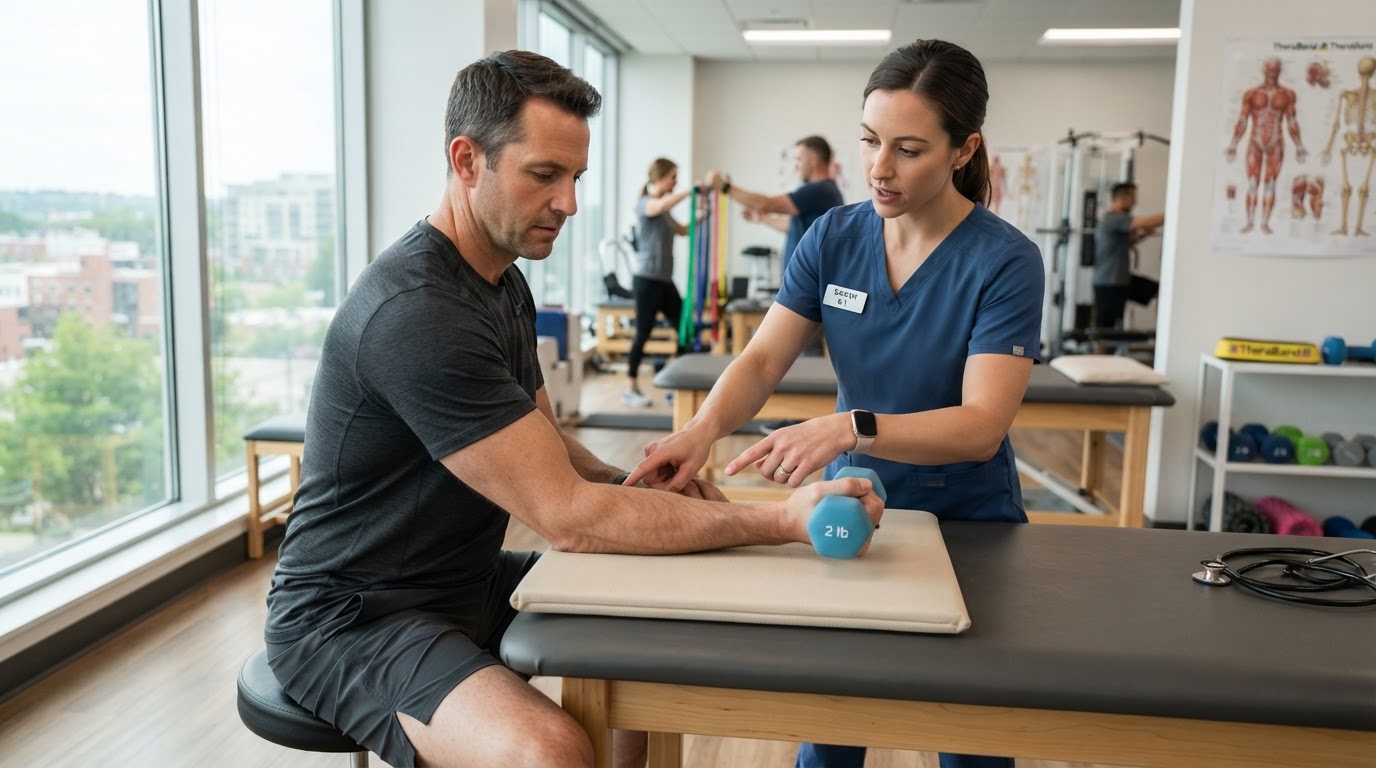
Elbow, wrist and hand pain is overwhelmingly driven by repetitive overuse — from racquet sports, manual labor, keyboard use and gripping tasks. Tennis elbow (lateral epicondylitis), golfer's elbow (medial epicondylitis), carpal tunnel syndrome and wrist tendonitis are the most common diagnoses, producing outer- or inner-elbow pain, hand numbness and tingling, and a weakened grip that interferes with work and sport.
Our upper-limb program targets forearm tendon overload, median nerve compression and wrist joint biomechanics. We use progressive tendon-loading and eccentric drills to rebuild tendon tolerance, nerve glides to free an irritated median nerve, shockwave therapy for stubborn tendinopathy, and custom wrist-splinting guidance to offload the irritated tissues at night and during aggravating tasks.
Conservative care resolves carpal tunnel symptoms in over 80% of mild-to-moderate cases and gets most elbow tendinopathies back to pain-free gripping and sport. The key is addressing the load that caused the injury — technique, equipment and ergonomics — alongside the tissue itself, so the problem does not simply return.
What it may help with
Conditions We Treat
- Tennis elbow (lateral epicondylitis)
- Golfer's elbow (medial epicondylitis)
- Carpal tunnel syndrome
- Wrist tendonitis and sprains
- De Quervain's tenosynovitis
- Grip weakness and hand numbness
Common Symptoms
- Outer or inner elbow sharp pain
- Hand numbness or night tingling
- Weak grip strength
- Wrist tendonitis
Relevant areas addressed
Forearm Extensor & Flexor Group
The common-extensor and common-flexor origins at the elbow, retrained with progressive loading for tendinopathy.
Median Nerve
The nerve compressed in carpal tunnel, mobilized with gliding techniques to relieve hand numbness.
Wrist & Carpal Joints
The small wrist joints mobilized and supported with splinting guidance to offload irritated tissues.
Hand & Grip Muscles
Intrinsic hand muscles strengthened to restore gripping power and dexterity.
Main treatment methods offered
Tendon loading & eccentric drills
A targeted, evidence-based technique tailored to your assessment and progressed as your tolerance improves.
Median nerve glides
Delivered by a registered therapist and integrated with your broader rehabilitation plan.
Shockwave therapy
Combined with hands-on care and a structured home routine for lasting, functional results.
Custom wrist splinting guidance
Adjusted each session to your response so treatment stays effective and comfortable.
Realistic outcomes & limitations
What You Can Expect
Restored gripping power
A realistic, evidence-supported outcome you can expect from consistent treatment and home adherence.
Relief from hand numbness
Most patients notice meaningful change within the first several sessions.
Pain-free typing, lifting, and sports
Sustained by the home program and periodic maintenance once the initial goals are met.
Honest Limitations
- Results depend on consistent home exercise and adherence to the prescribed program.
- Acute inflammation, recent surgery or new symptoms may require modification or medical co-management.
- Outcomes vary by individual; we set realistic milestones after your initial assessment.
Assessment, duration & treatment process
Initial Assessment (45 minutes)
A focused exam of elbow, wrist and hand function, nerve signs and the tasks driving the overuse.
Treatment Sessions (30–60 minutes)
Tendon loading, nerve glides, shockwave and manual therapy, with splinting guidance and a home routine.
Return to Activity
We address technique, equipment and ergonomics so you return to sport or work without recurrence.
Precautions & possible side effects
Suitable For
- Racquet-sport players, computer users and manual laborers.
- Patients with tennis or golfer's elbow.
- Those with carpal tunnel or wrist tendonitis.
- People wanting to restore grip strength and dexterity.
Precautions
- Severe or worsening nerve symptoms may need medical review.
- Splinting is balanced against active loading to avoid stiffness.
- Shockwave is avoided over certain conditions; we screen first.
- Ergonomic and technique change is essential to prevent recurrence.
Common questions & booking
Ready to take your first step?
Book your initial consultation at One Step Ahead Mobility in Toronto. No referral required.
Take Your First Step Toward Lasting Relief
Every treatment at One Step Ahead Mobility begins with a thorough assessment and a clear, personalized plan. No referral required — direct billing available.