Concussion & Vestibular Rehabilitation
Multimodal recovery protocols for mild traumatic brain injury, dizziness, and visual tracking
Comprehensive concussion assessment addressing cervical spine involvement, oculomotor deficits, vestibular dysfunction, and exertional tolerance.
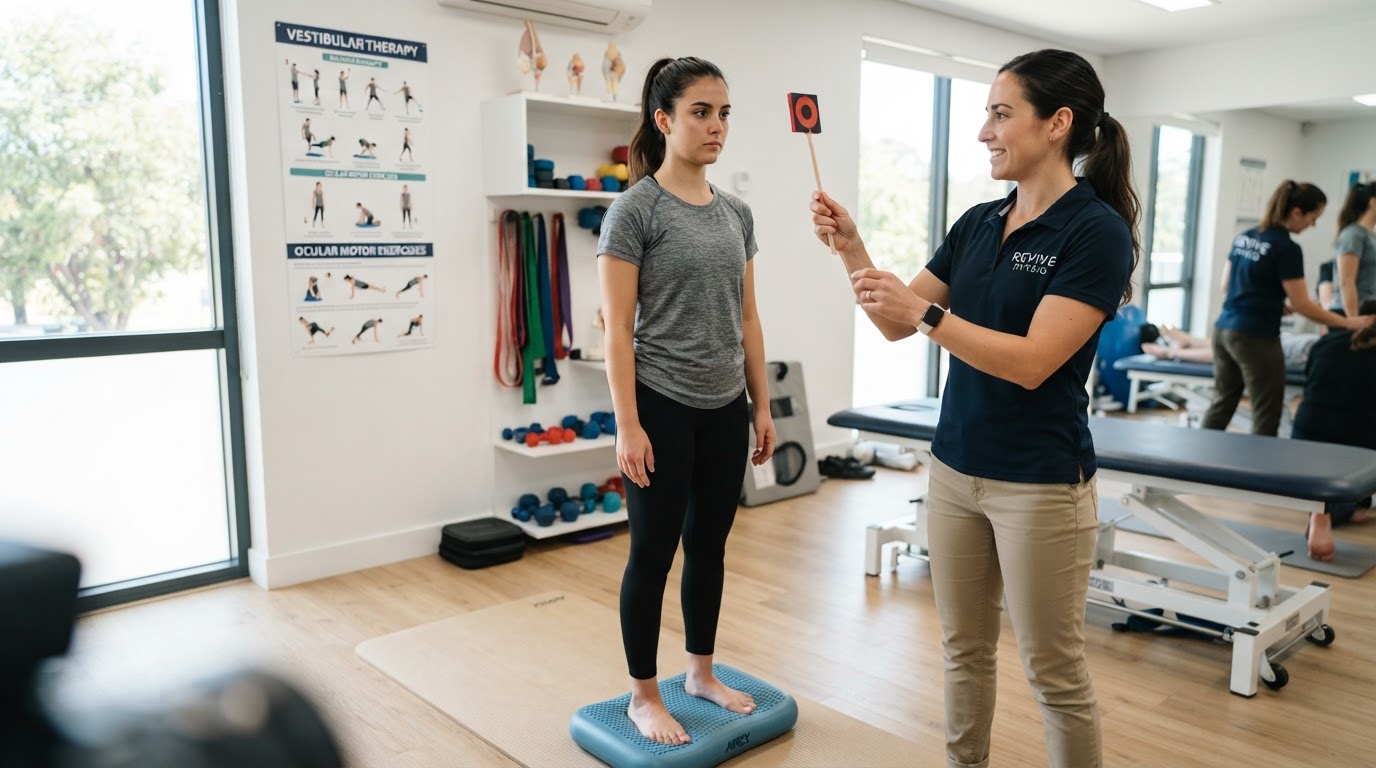

What it is & how it works
A concussion is a mild traumatic brain injury that disrupts brain function through a complex cascade of metabolic, vascular and inflammatory changes. While most people recover within two weeks, a significant minority develop persistent symptoms — dizziness, headache, brain fog, visual disturbance and exercise intolerance — that interfere with school, work and sport. Current evidence shows that prolonged rest beyond 48 hours actually worsens outcomes, and active, targeted rehabilitation is now the standard of care.
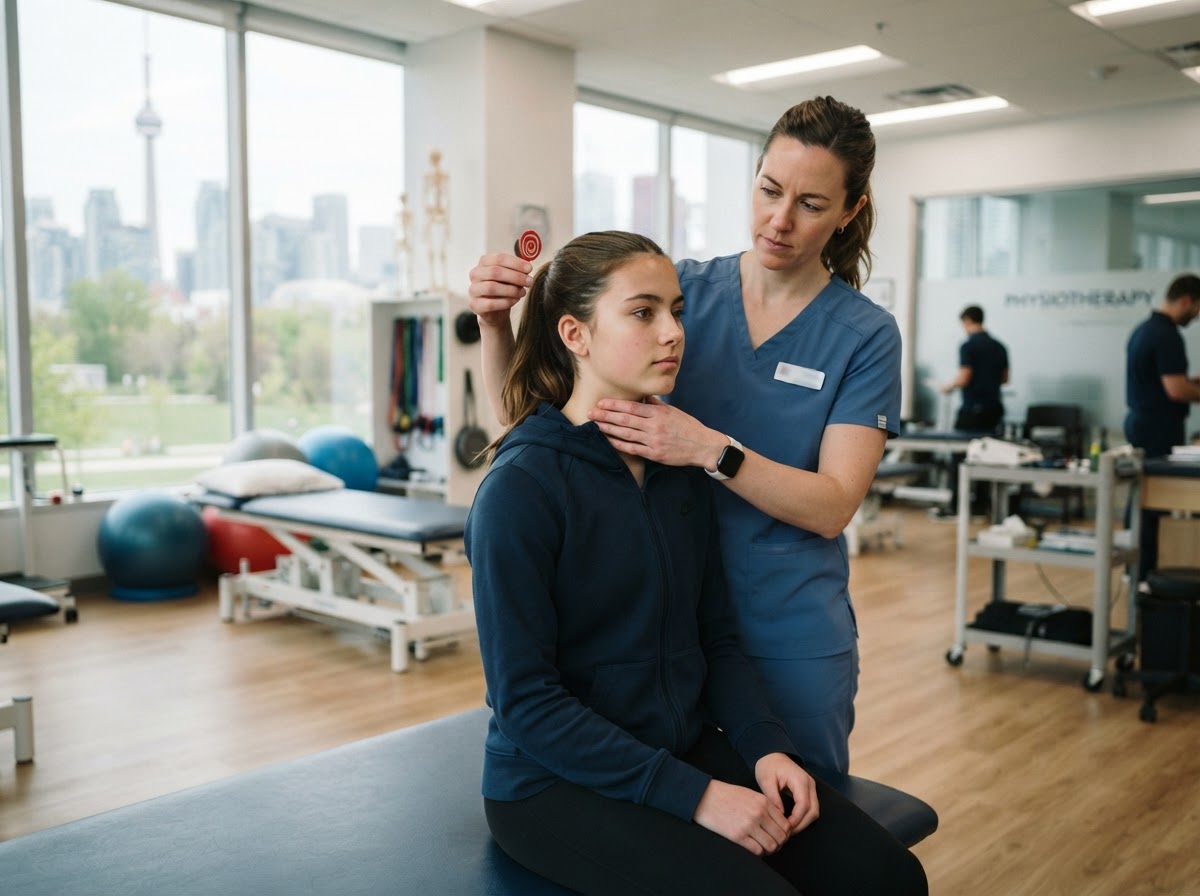
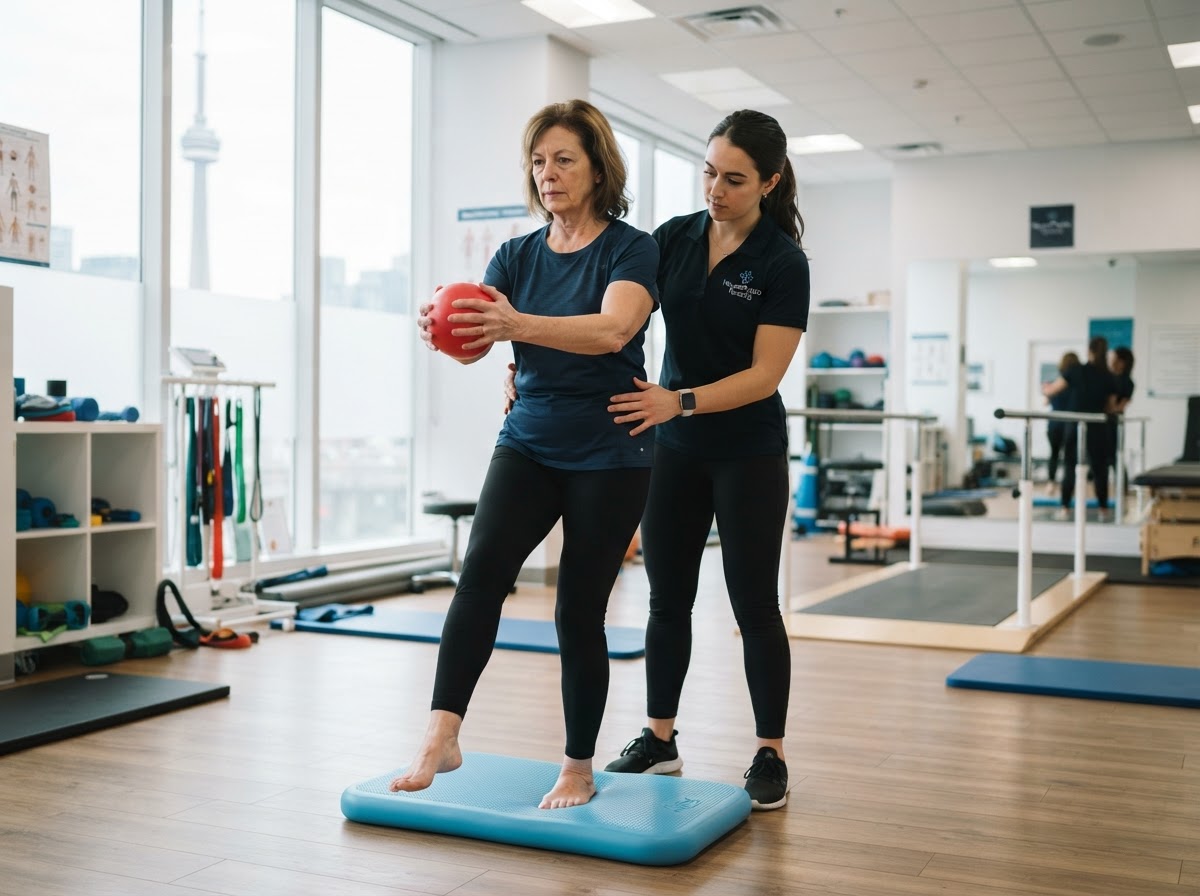
Our concussion program is multimodal. Persistent symptoms rarely come from a single source: we assess the cervical spine (often injured in the same impact), the vestibular system (causing dizziness and motion sensitivity), the oculomotor system (convergence and tracking) and the autonomic system (exercise tolerance). Each deficit is treated specifically — cervical manual therapy for headache, vestibular-ocular reflex (VOR) drills for dizziness, habituation for motion sensitivity and graded Buffalo treadmill exertion for return to sport.
Return to school, work and sport is staged and symptom-limited. We use objective measures — symptom scores, balance testing, and a graded exertional protocol — rather than calendar days alone, so athletes and students return safely and with a much lower risk of re-injury or prolonged recovery.
What it may help with
Conditions We Treat
- Post-concussion syndrome (symptoms beyond 2 weeks)
- Vestibular dysfunction and BPPV
- Cervicogenic and post-traumatic headaches
- Oculomotor and convergence deficits
- Exercise intolerance and autonomic dysregulation
- Sport- and accident-related mild traumatic brain injury
Common Symptoms
- Persistent dizziness & lightheadedness
- Neck strain & tension headaches
- Visual tracking difficulty & fog
- Exercise intolerance
Relevant areas addressed
Cervical Spine
Upper neck joints and muscles often injured in the same impact, a major and treatable source of post-concussion headache.
Vestibular System
The inner-ear balance organs, retrained with VOR and habituation drills to reduce dizziness and motion sensitivity.
Oculomotor System
Eye-tracking and convergence retrained to resolve visual fog and reading difficulty.
Autonomic & Cardiovascular System
Heart-rate-regulated exertion retrained with the Buffalo treadmill test to safely restore exercise tolerance.
Main treatment methods offered
Cervical spine manual therapy
A targeted, evidence-based technique tailored to your assessment and progressed as your tolerance improves.
Vestibulo-ocular reflex (VOR) drills
Delivered by a registered therapist and integrated with your broader rehabilitation plan.
Buffalo treadmill exertional testing
Combined with hands-on care and a structured home routine for lasting, functional results.
Habituation exercises
Adjusted each session to your response so treatment stays effective and comfortable.
Realistic outcomes & limitations
What You Can Expect
Relief from post-concussion headaches
A realistic, evidence-supported outcome you can expect from consistent treatment and home adherence.
Clearer vision & focus
Most patients notice meaningful change within the first several sessions.
Safe return to work, study, or sports
Sustained by the home program and periodic maintenance once the initial goals are met.
Resolution of motion sickness
Confirmed by objective re-measurement throughout your program.
Honest Limitations
- Results depend on consistent home exercise and adherence to the prescribed program.
- Acute inflammation, recent surgery or new symptoms may require modification or medical co-management.
- Outcomes vary by individual; we set realistic milestones after your initial assessment.
Assessment, duration & treatment process
Initial Assessment (45–60 minutes)
A multimodal screen of cervical, vestibular, oculomotor and exertional function plus a symptom inventory to identify which systems are driving your symptoms.
Targeted Treatment (30–60 minutes)
Sessions address your specific deficits — manual therapy for the neck, VOR drills for dizziness, vision exercises and graded exertion — with a daily home routine.
Graded Return
A staged, symptom-limited return to school, work and sport guided by objective testing, with physician clearance for full contact.
Precautions & possible side effects
Suitable For
- Students, athletes and adults with symptoms beyond 2 weeks.
- People with dizziness, headache or visual disturbance after impact.
- Athletes needing a safe, evidence-based return-to-sport protocol.
- Patients with exercise intolerance or motion sensitivity.
Precautions
- Strict rest beyond 48 hours is avoided; we use active recovery instead.
- Symptom-limited progression — any symptom spike prompts a step back.
- Red-flag signs (worse headache, vomiting, weakness) require urgent imaging.
- Return-to-contact sport requires physician clearance.
Common questions & booking
Ready to take your first step?
Book your initial consultation at One Step Ahead Mobility in Toronto. No referral required.
Take Your First Step Toward Lasting Relief
Every treatment at One Step Ahead Mobility begins with a thorough assessment and a clear, personalized plan. No referral required — direct billing available.